 EN
EN

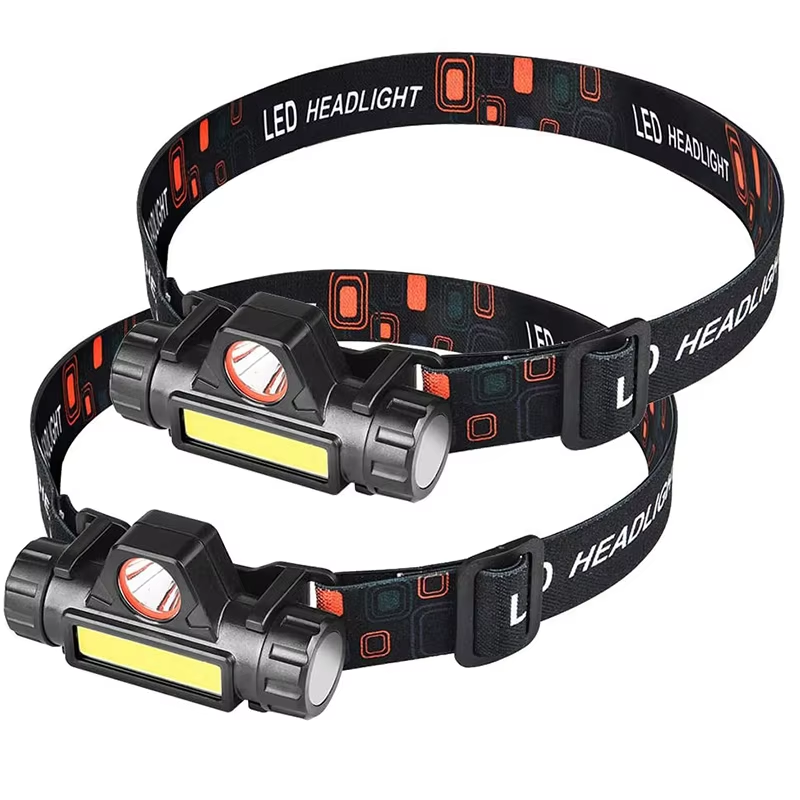
When you're navigating a remote trail at midnight, managing a construction site after dark, or responding to an emergency in a confined space, the question of whether you truly need the brightest headlamp available is not merely academic — it can directly affect your safety, performance, and decision-making. Lighting technology has advanced rapidly, and today's high-lumen headlamps deliver outputs that were unimaginable a decade ago. But does maximum brightness automatically translate to maximum usefulness in every extreme scenario?
The answer is nuanced. The brightest headlamp on the market is not always the universally correct choice, but in many extreme outdoor and professional night-work environments, high-output illumination is far more than a luxury — it is a functional necessity. Understanding when and why maximum brightness matters, as well as the trade-offs it introduces, allows buyers, field workers, and procurement managers to make genuinely informed decisions rather than defaulting to either extreme of under-lighting or over-specifying.
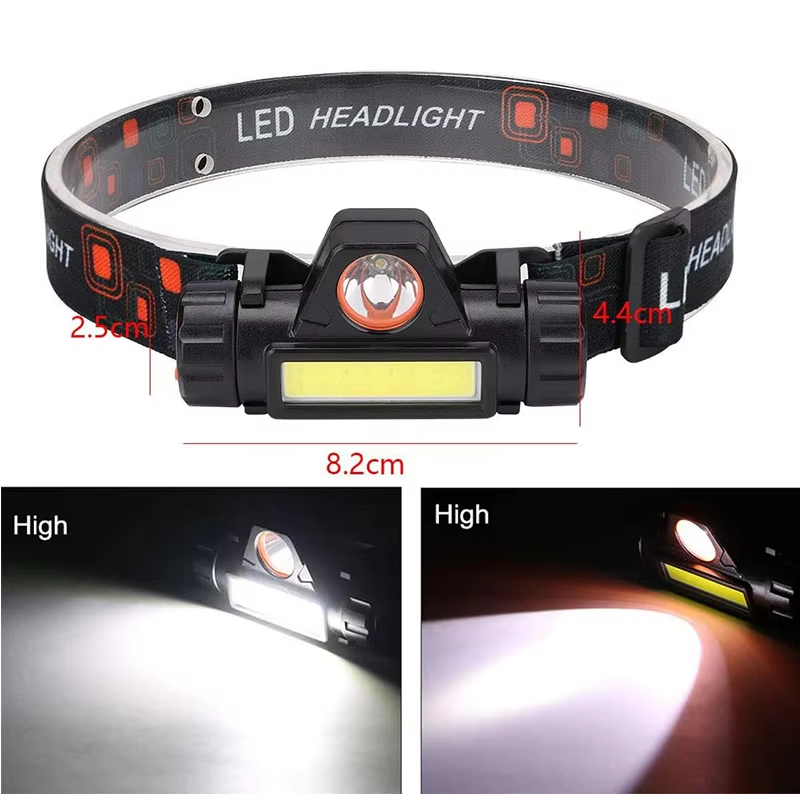
Understanding What Makes a Brightest Headlamp Genuinely Bright
Lumens, Beam Distance, and Practical Light Output
Brightness in headlamps is most commonly measured in lumens, which quantifies the total light emitted. However, lumen ratings alone can be misleading. A brightest headlamp with 2000 lumens concentrated into a tight spotlight beam will illuminate objects hundreds of meters away, while the same lumen count spread across a wide flood beam may only illuminate your immediate surroundings. For extreme outdoor use, understanding the relationship between lumens, beam distance, and beam pattern is essential before selecting a headlamp.
Beam distance is measured in meters and tells you how far the light reaches before dropping to the equivalent of a full moon's illumination — a standard benchmark used in outdoor lighting. A genuinely bright headlamp for extreme conditions typically combines high peak lumens with meaningful beam distance, often exceeding 150 to 300 meters. This combination becomes critical when you need to spot obstacles, assess terrain, or identify hazards at a distance during technical hiking, search and rescue, or heavy outdoor equipment operation at night.
Battery chemistry and driver circuitry also play a significant role in sustained brightness. Many headlamps claim peak brightness that they can only sustain for a few minutes before thermal or battery regulation reduces output. A brightest headlamp that maintains high lumen output consistently throughout a work shift or multi-hour expedition is substantially more useful than one that flashes brilliant output briefly before dimming.
LED Technology and Its Role in High-Output Headlamps
Modern LED technology is the foundation of every high-performance brightest headlamp available today. Advances in chip efficiency, thermal management, and driver design have made it possible to achieve extraordinary light output from compact, lightweight units. High-performance LEDs such as those used in top-tier headlamps convert electrical energy into light with minimal heat waste, which extends both battery life and the lamp's operational lifespan.
Rechargeable brightest headlamp models equipped with USB-C charging have become increasingly dominant in both consumer outdoor and professional work markets. USB-C enables faster charging cycles and compatibility with a wide range of power banks and vehicle chargers — critical advantages for extended expeditions or remote job sites where access to conventional power outlets is limited. The convergence of high LED efficiency and modern charging infrastructure has made the brightest headlamp more practical and field-ready than ever before.
When Extreme Conditions Demand the Brightest Headlamp
Challenging Terrain and Technical Outdoor Activities
Mountaineering, canyoneering, trail running at night, and backcountry navigation all create conditions where inadequate light becomes a genuine safety liability. In these scenarios, the brightest headlamp provides a measurable advantage by extending your visual range, allowing earlier hazard detection, and reducing the cognitive load of navigating in darkness. When you can see a rock fall zone, a creek crossing, or an unmarked trail junction well in advance, you have more time to make sound decisions.
Technical alpine climbing, in particular, places extreme demands on headlamp performance. Pre-dawn starts on high-altitude routes mean operating in complete darkness over complex terrain where a dim beam could result in a misplaced foot placement or an inability to read route markers. Experienced alpinists and mountain guides consistently prioritize the brightest headlamp with reliable battery performance over lighter alternatives that sacrifice output. In these environments, brightness is not an upgrade — it is a baseline requirement.
Night trail running presents a different but equally compelling case. The combination of speed, uneven terrain, and darkness means that reaction time is critical. A brightest headlamp with sufficient beam distance gives runners the visual lead time they need to respond to obstacles before reaching them. Low-output alternatives, while sufficient for walking, simply do not provide the visual range needed at running pace on technical trails.
Professional Night Work and Industrial Applications
Beyond recreation, the brightest headlamp has significant utility in professional contexts. Construction workers operating heavy machinery at night, utility crews conducting emergency repairs after dark, forestry teams clearing storm damage before dawn, and emergency responders managing incident scenes all operate in environments where light quality directly affects work quality and personal safety. In these settings, a high-lumen brightest headlamp reduces errors, increases confidence, and supports faster task completion.
Search and rescue operations represent perhaps the most demanding use case. Teams searching for missing persons in forests, mountains, or disaster debris fields need both wide flood illumination for close-range search work and long-distance throw for scanning open terrain. A brightest headlamp that offers multiple output modes — including a high-power spotlight and an adjustable flood — becomes a genuinely versatile tool in these critical applications.
Industrial inspection, mining operations, and underground infrastructure work similarly benefit from maximum brightness. In enclosed or poorly lit environments, higher lumen output translates directly into more detail visibility, reducing the risk of missed defects, structural hazards, or safety non-compliance. Procurement teams sourcing headlamps for these environments should evaluate sustained brightness performance and beam quality alongside peak lumen ratings to ensure field reliability.
Trade-Offs and Considerations When Choosing a Brightest Headlamp
Battery Life Versus Maximum Output
One of the most significant trade-offs associated with the brightest headlamp is battery drain. Operating at maximum lumen output consumes battery reserves far more rapidly than moderate or low modes. For a short, intense task, this is entirely acceptable. For multi-hour expeditions or overnight work shifts, it requires careful power management. Most high-quality brightest headlamp models address this through multi-mode operation, allowing users to dial brightness down during sustained travel and reserve maximum output for critical moments.
Rechargeable brightest headlamp units with USB-C connections offer a practical solution to this challenge. Users can carry lightweight external power banks and recharge on the move, dramatically extending effective operational time without carrying excessive battery weight. This approach is now standard practice among serious outdoor professionals and long-shift industrial workers who rely on headlamps as primary tools rather than occasional accessories.
Weight, Comfort, and Wearability for Extended Use
Higher output headlamps historically carried a weight penalty, as larger battery packs and more robust optics added grams. Modern engineering has substantially closed this gap, but the brightest headlamp options still tend to weigh slightly more than their lower-output counterparts. For multi-day mountaineering or ultra-distance events, every gram matters, and users must balance the undeniable value of high brightness against the cumulative fatigue of a heavier unit over many hours of wear.
Headband design, pressure distribution, and balance between the lamp housing and battery pack all contribute to comfort during extended use. A brightest headlamp that concentrates all weight at the front creates a different wearing experience than one with a rear-mounted battery pack that balances the load. For long-duration night work or multi-hour trail activity, wearability is a practical performance factor that should not be overlooked during the selection process.
Matching the Brightest Headlamp to Your Specific Scenario
Identifying Your Core Lighting Requirements
The most effective way to determine whether the brightest headlamp is necessary is to define your primary use case clearly. If your activity involves operating at speed in complex terrain, covering large dark areas in search operations, or performing precision work in low-light industrial environments, maximum brightness is likely justified. If your use is primarily casual camping, reading in a tent, or walking well-marked paths, lower output models may serve you adequately at lower cost and weight.
Environmental conditions also inform the decision. Fog, rain, and dusty construction sites scatter light differently than clear dry air. In low-visibility atmospheric conditions, a brightest headlamp does not always provide proportionally greater usable illumination because ambient particles scatter the beam. Understanding how your environment will interact with light output helps set realistic performance expectations and avoids over-specification in inappropriate contexts.
Evaluating Features Beyond Raw Brightness
Selecting the right brightest headlamp also involves evaluating features that support practical use in your target environment. Water resistance and dust protection ratings matter significantly for outdoor and industrial deployment. A headlamp rated to IPX4 or higher will withstand rain and splash, while IP67 or IP68 ratings indicate submersion capability — relevant for rescue divers, flood response teams, and workers in wet industrial environments.
Red light modes, strobe functions, and adjustable beam angles all contribute to versatility beyond raw lumen output. A brightest headlamp that also incorporates a red mode preserves night vision during prolonged dark adaptation — a meaningful advantage for astronomers, wildlife photographers, and military personnel. Tilt-adjustable lamp heads allow directing the beam precisely where it is needed without repositioning the entire headband, increasing efficiency during close-up work tasks.
Durability of construction is another critical differentiator. High-impact resistance, corrosion-resistant housing materials, and robust headband stitching extend the service life of a brightest headlamp in demanding environments. For B2B buyers sourcing headlamps for field teams, durability translates directly into lower replacement costs and fewer operational disruptions caused by equipment failures in the field.
FAQ
Is the brightest headlamp always better for outdoor use?
Not in every situation, but for extreme outdoor conditions involving technical terrain, high speed, or complex navigation in complete darkness, a brightest headlamp provides genuine safety and performance advantages. For casual use on well-marked paths or indoor activities, a lower-output model may be fully sufficient and more battery-efficient.
How long does the battery last on maximum brightness mode?
Battery duration at maximum output varies by model and battery capacity, but most high-performance brightest headlamp units sustain peak output for one to three hours before stepping down to preserve battery reserves. Using a rechargeable brightest headlamp with USB-C charging and carrying a power bank can effectively extend operational time without carrying bulky spare batteries.
What lumen level is considered the brightest headlamp for professional night work?
For professional applications such as search and rescue, construction site supervision, or industrial inspection, headlamps delivering 1000 lumens or more are generally considered high-performance. Some specialized models exceed 3000 lumens. The key is not just peak lumens but sustained output and beam distance, as these determine real-world usability during extended work sessions.
Does a brightest headlamp work well in foggy or rainy conditions?
In heavy fog or rain, extremely high lumen output can actually create glare and reflection that reduces usable visibility. In such conditions, a brightest headlamp with adjustable output modes or a wide low-angle flood beam often performs better than a maximum-power spotlight setting. Selecting a model with multiple beam modes gives you the flexibility to adapt to varying atmospheric conditions effectively.
