 EN
EN

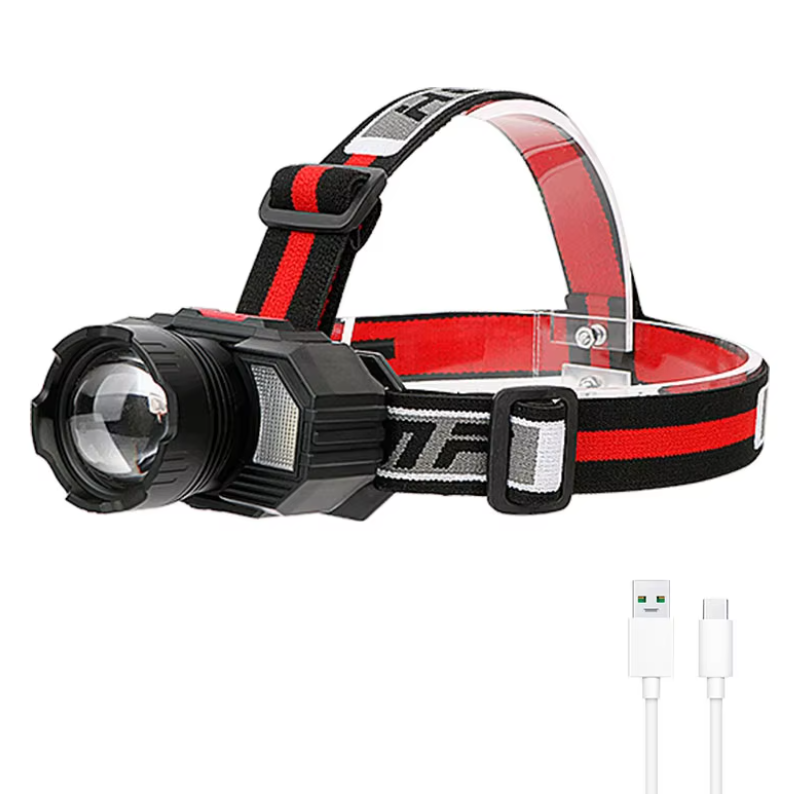
When planning a multi-day trek, a deep cave expedition, or an overnight trail run, the quality of your lighting equipment can determine whether your journey proceeds safely or ends prematurely. The question of whether the brightest headlamp can genuinely support long-duration outdoor exploration activities is one that serious adventurers, field professionals, and gear procurement teams ask with increasing frequency. The answer is not simply a matter of raw lumen output — it involves a careful evaluation of battery endurance, thermal performance, beam engineering, and how the headlamp behaves under real-world sustained use.
The brightest headlamp on the market today is not merely about delivering an intense beam at peak output for a few minutes. True suitability for extended exploration means the headlamp must sustain meaningful illumination across hours of continuous use, adapt intelligently to shifting environmental demands, and hold up physically through rough terrain, moisture, and temperature variation. Understanding what separates a genuinely capable brightest headlamp from one that simply looks impressive on a specification sheet is essential before committing to any serious outdoor undertaking.
What Long-Duration Exploration Actually Demands from a Brightest Headlamp
Sustained Output Versus Peak Output
Many headlamps are marketed with an impressive maximum lumen rating that is only achievable for a short burst — sometimes as little as one to three minutes — before the device thermally throttles or the battery drops below the threshold needed to sustain peak performance. For a long-duration exploration activity, what matters far more is the regulated output level the brightest headlamp can maintain across several hours of use.
A well-engineered brightest headlamp will use intelligent driver circuitry to deliver a consistent, usable beam over an extended runtime rather than sacrificing endurance for a headline specification. Explorers moving through cave systems, dense forest trails, or high-altitude terrain at night need to trust that the light reaching the ground will remain stable and predictable, not fade progressively as battery voltage drops.
When evaluating whether a brightest headlamp can support your specific activity duration, always prioritize the regulated runtime figures at high or medium-high output settings rather than the absolute maximum lumen figure. This distinction is what separates headlamps built for endurance from those engineered purely for short-burst brightness demonstrations.
Battery Capacity and Recharging Logistics
Battery architecture is a defining factor in whether the brightest headlamp can carry an explorer through a full night, a multi-stage route, or back-to-back expedition days. Integrated rechargeable batteries with USB-C input have become the preferred standard for serious field use because they allow opportunistic top-up charging from power banks, solar panels, or vehicle outlets — critical in remote environments where spare battery packs are impractical to carry in volume.
A brightest headlamp equipped with a high-capacity lithium cell and USB-C fast charging capability enables an explorer to restore meaningful runtime during rest periods, reducing dependence on carrying multiple fully charged spares. This approach is particularly valuable for multi-day expedition use where weight management is as important as power management.
Understanding the relationship between output mode selection and battery longevity is also essential. The brightest headlamp used consistently on its highest setting will drain significantly faster than one used intelligently across mixed modes — combining high beam for active navigation, medium output for camp movement, and red-light or low modes for close-range tasks where full intensity is unnecessary and battery-wasteful.
Beam Engineering and Its Role in Extended Exploration Performance
Throw Distance and Flood Balance
For long-duration outdoor exploration, the beam profile of the brightest headlamp matters as much as its raw brightness. A headlamp that produces an extremely narrow throw beam illuminates distant objects effectively but leaves peripheral vision poorly supported, increasing the risk of misstep on uneven ground. Conversely, a pure flood beam provides excellent close-range coverage but limits the explorer's ability to read terrain ahead at speed or in complex environments like rocky descents or technical trail sections.
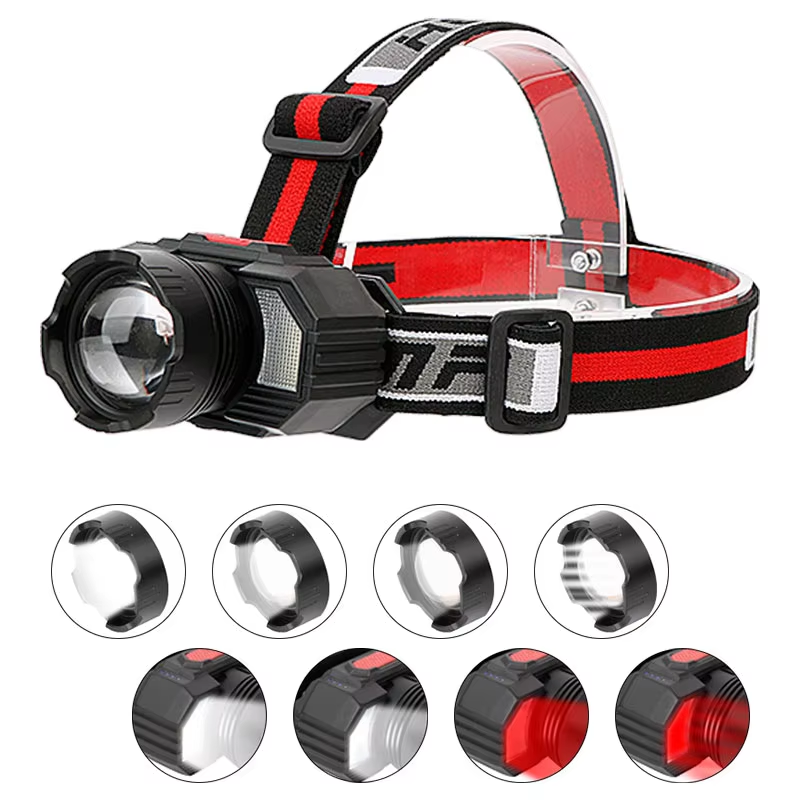
The most capable brightest headlamp designs for extended exploration offer a balanced or adjustable beam that can transition between wide flood and focused throw, allowing the wearer to adapt their light profile to the immediate task. This adaptability reduces eye fatigue over long hours of use — a factor that becomes critically important after six or more hours of continuous activity in low-light environments.
Optical lens design and reflector geometry are what translate raw LED output into a usable beam pattern. A brightest headlamp that channels its output through a well-designed optic will deliver more perceptible, practical illumination at trail level than a comparably rated lamp with a poor optical system that wastes a significant portion of emitted light.
Spot and Flood Mode Switching in the Field
Field-accessible mode switching is a practical necessity for explorers who need their brightest headlamp to perform across multiple scenarios within a single outing. Descending a steep scree field, navigating a stream crossing, reading a map, and moving through dense brush all require different beam profiles and brightness levels. A headlamp that requires complex button sequences to switch modes becomes frustrating and even hazardous when wearing gloves or operating in cold, wet conditions.
Intuitive single-button or dual-button control systems that allow rapid cycling through key modes — high, medium, low, flood, and red light — are a design priority for the brightest headlamp intended for serious prolonged use. The ability to quickly reduce output for close tasks and restore high output for navigation without interrupting movement is a real performance differentiator in extended field conditions.
Thermal Management During Prolonged High-Output Use
Why Heat Buildup Limits Long-Duration Brightness
High-output LED arrays generate significant heat, and thermal management is one of the engineering challenges that separates headlamps designed for genuine prolonged use from those that simply achieve high peak numbers in controlled conditions. Without adequate heat dissipation, a brightest headlamp will progressively throttle its output to protect the LED and driver circuitry — a process called thermal regulation — which can reduce effective brightness by thirty to fifty percent within minutes of sustained peak operation.
Premium brightest headlamp designs address this through aluminum heat sink housings, thermal paste interfaces between the LED module and the chassis, and intelligent driver firmware that modulates current before thermal damage occurs. The result is a more gradual, manageable brightness reduction under sustained load rather than a sudden, steep performance drop that leaves the explorer inadequately lit.
Ambient temperature plays a role as well. In cold alpine or winter environments, thermal throttling is typically less aggressive because the environment itself assists in heat dissipation. In humid tropical conditions or during physically intense activity where the headlamp warms from both LED heat and body heat, thermal management becomes more challenging and the design quality of the brightest headlamp chassis becomes correspondingly more important.
Build Quality and Environmental Resilience Over Extended Use
A brightest headlamp deployed on a long-duration exploration activity will inevitably encounter rain, stream splashes, dust, sand, sweat, and physical impact. IPX4 water resistance is the minimum acceptable standard for serious outdoor use, providing protection against rain and splashing from multiple directions. For cave exploration, stream crossings, or high-precipitation environments, IPX6 or IPX7 rated designs offer meaningfully greater protection and peace of mind.
The headband and adjustment mechanism deserve attention as well. A brightest headlamp worn for eight or more continuous hours must remain comfortable and securely positioned. Slippage mid-route forces the explorer to stop and readjust, interrupting focus and pace. Ergonomically designed headbands with adjustable rear straps and balanced weight distribution between the lamp unit and battery housing significantly reduce fatigue and displacement during extended wear.
Practical Considerations for Selecting a Brightest Headlamp for Extended Expeditions
Matching Output and Runtime to Your Specific Activity Profile
Different long-duration exploration activities place different demands on the brightest headlamp. A fast-paced trail runner covering forty kilometers overnight needs consistent high-throw output to safely navigate technical terrain at speed, prioritizing beam distance and runtime above all other factors. A geological survey team working inside a cave system for twelve hours needs maximum flood coverage, long battery life, and reliable recharging capability between shifts.
Understanding your specific activity profile before selecting the brightest headlamp ensures that the specification set you prioritize aligns with your actual field conditions. A headlamp optimized for maximum throw at high altitude may deliver disappointing close-range coverage for a team working in a confined underground environment, while a cave-optimized design may lack the distance needed for open-terrain night navigation.
The brightest headlamp that best supports long-duration exploration is therefore not necessarily the one with the highest published lumen rating — it is the one whose balanced combination of output modes, runtime, beam profile, thermal management, and physical durability most closely matches the demands of the specific activity it will be asked to support.
The Role of USB-C Rechargeability in Extended Field Operations
USB-C rechargeability has transformed how explorers and field professionals manage lighting power logistics. The ability to recharge the brightest headlamp from the same cable and power bank used for navigation devices, communication equipment, and cameras eliminates the need to carry separate charging infrastructure and reduces overall kit weight. This convergence is a practical advantage that compounds significantly over multi-day expeditions.
Fast-charge compatibility via USB-C means that even a short rest stop of thirty to forty-five minutes can meaningfully restore battery reserve, extending effective operational range without requiring a full overnight charge cycle. For explorers operating on irregular schedules or in environments where rest periods are unpredictable, this flexibility is a genuine capability multiplier that makes the brightest headlamp a more dependable long-duration tool.
When evaluating a brightest headlamp for expedition procurement, confirming that the USB-C port is properly sealed against moisture ingress — typically indicated by a snug rubber cover or waterproof connector housing — is an important detail that prevents a common point of failure in wet field conditions.
FAQ
Can the brightest headlamp maintain high output for an entire overnight expedition?
Whether the brightest headlamp can sustain high output across a full overnight expedition depends on the specific battery capacity, driver regulation quality, and the output mode used. Most high-quality rechargeable brightest headlamp models will deliver consistent medium-high output for six to twelve hours on a full charge, which covers most single-night expeditions. For longer durations, pairing the headlamp with a power bank for mid-route recharging during rest periods is the practical solution.
Does high brightness mean the headlamp will overheat during long use?
High-output brightest headlamp designs incorporate thermal management features — including heat sink housings and driver-level thermal regulation — that prevent dangerous overheating during sustained use. The headlamp may reduce its output gradually under sustained maximum load as a protective measure, but this thermal regulation is a designed safety behavior, not a defect. Using the headlamp at a high-but-not-maximum setting during long activities reduces thermal stress and extends both runtime and component lifespan.
Is a USB-C rechargeable brightest headlamp reliable enough for remote expeditions?
A USB-C rechargeable brightest headlamp is well-suited for remote expedition use when paired with a suitable capacity power bank. The universal compatibility of USB-C allows integration into a shared charging ecosystem with other expedition devices, reducing redundancy in carried equipment. Selecting a model with a sealed, moisture-protected USB-C port ensures reliable operation in wet and demanding field conditions typical of remote exploration environments.
What output mode should be used to maximize runtime on a long exploration activity?
To maximize runtime without sacrificing functional illumination, experienced explorers use a dynamic mode strategy: deploying the brightest headlamp at high output during technically demanding sections — steep descents, complex navigation, fast movement — and stepping down to medium or low output during steady hiking, camp movement, or close-range tasks. This adaptive approach can extend effective runtime by thirty to sixty percent compared to running the headlamp at maximum output continuously throughout the activity.
Table of Contents
- What Long-Duration Exploration Actually Demands from a Brightest Headlamp
- Beam Engineering and Its Role in Extended Exploration Performance
- Thermal Management During Prolonged High-Output Use
- Practical Considerations for Selecting a Brightest Headlamp for Extended Expeditions
-
FAQ
- Can the brightest headlamp maintain high output for an entire overnight expedition?
- Does high brightness mean the headlamp will overheat during long use?
- Is a USB-C rechargeable brightest headlamp reliable enough for remote expeditions?
- What output mode should be used to maximize runtime on a long exploration activity?
