 EN
EN

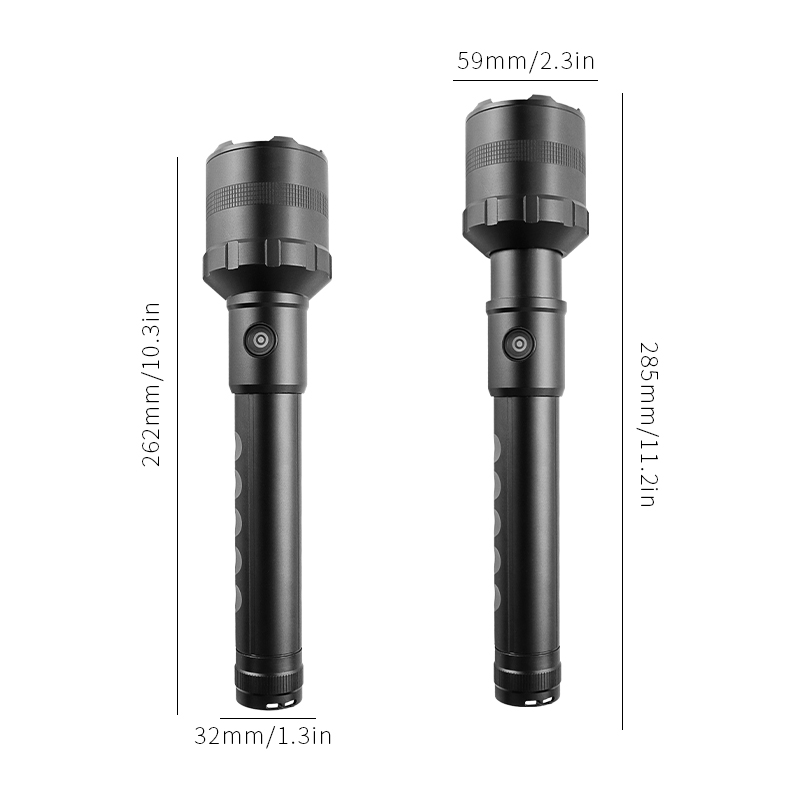
When professional users depend on lighting tools in high-stakes environments, not just any torch will do. tactical flashlights are engineered to meet demands that ordinary consumer-grade flashlights simply cannot handle. From law enforcement officers navigating dark corridors to emergency responders working in hazardous conditions, the right light source can make a critical difference in outcomes. Understanding what separates a reliable unit from a subpar one is essential for anyone making a serious purchasing decision.
The market for tactical flashlights has expanded significantly, and that growth has brought both innovation and confusion. With dozens of models promising military-grade performance, professional users need a clear framework for evaluating what truly matters. This article examines the core features that define reliable tactical flashlights so that procurement managers, field operators, and serious outdoor professionals can make informed, confident choices. Every feature discussed here connects directly to real-world performance requirements, not marketing language.
Construction and Durability Standards
Housing Material and Build Quality
The body of reliable tactical flashlights must withstand physical punishment without compromising function. High-grade aluminum alloy, particularly aerospace-grade variants, is the most widely trusted material for professional-use housings. This material offers an excellent strength-to-weight ratio, resisting impacts, drops, and compression while remaining light enough for extended carry. The surface finish also matters — hard-anodized coatings protect against abrasion and corrosion, which is essential when tactical flashlights are exposed to mud, moisture, salt air, or rough handling in the field.
Build quality extends beyond the outer shell. Thread quality on battery compartments and head sections must be precise enough to maintain a watertight seal under repeated assembly and disassembly. Loose tolerances in manufacturing create micro-gaps that allow moisture intrusion, which degrades performance over time. Professional-grade tactical flashlights are inspected to ensure consistent fit and finish across all components, not just the visible exterior. This attention to internal construction is one of the clearest indicators of a well-engineered product.
Impact and Water Resistance Ratings
Standardized ratings give professional users a reliable benchmark when comparing tactical flashlights. The IPX rating system, governed by the IEC 60529 standard, measures resistance to dust and moisture ingress on a numerical scale. IPX4 indicates splash resistance from any direction, while IPX7 certifies that the light can survive temporary immersion in water up to one meter deep. For roles involving maritime operations, heavy rain, or flood response, IPX7 or higher should be considered the minimum threshold when evaluating tactical flashlights.
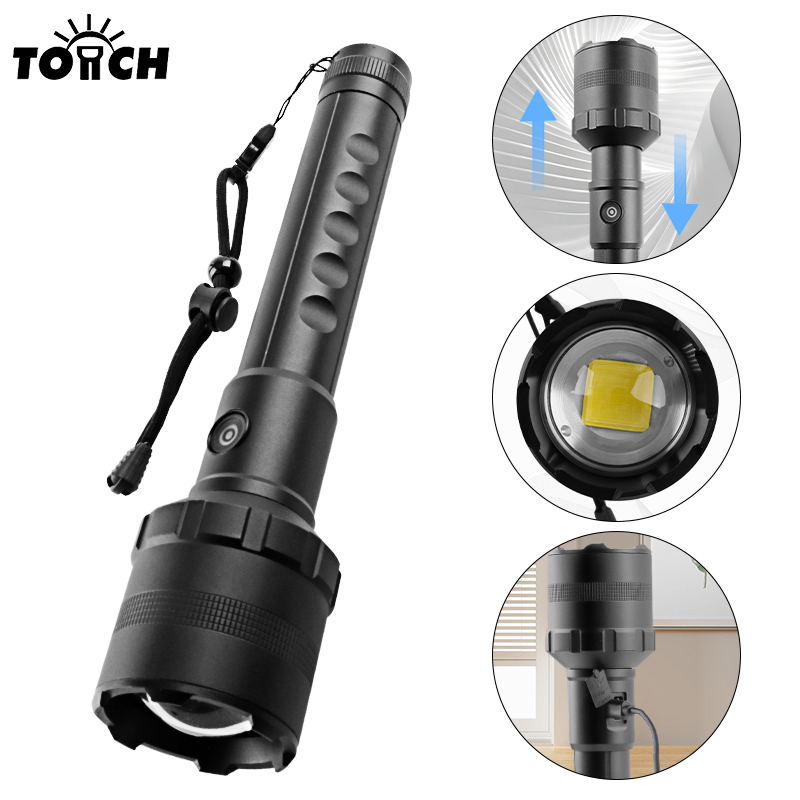
Impact resistance ratings, often expressed in drop-test distances, indicate how well tactical flashlights survive sudden shocks. A common industry benchmark is a one-meter drop test onto concrete from multiple angles. Some professional models exceed this with two or even three-meter drop ratings. These specifications are not just marketing points — they reflect the physical reality of field use, where lights are dropped, knocked against surfaces, and sometimes subjected to recoil vibration when mounted on firearms. Choosing a unit with certified ratings rather than vague claims protects your investment and your safety.
Light Output and Beam Performance
Lumen Output and Practical Brightness
Raw lumen output is one of the most cited specifications for tactical flashlights, but professional users need to understand what the numbers actually mean in practice. A high lumen count produces intense brightness, but without proper beam shaping, that light can scatter inefficiently. For most professional applications, tactical flashlights operating between 500 and 2000 lumens provide sufficient output for threat identification, navigation, and signaling. Extremely high-lumen models above 3000 lumens may blind both the user and the target in reflective environments, which creates tactical disadvantages rather than advantages.
Thermal regulation is a critical companion to lumen output. When tactical flashlights operate at peak brightness for extended periods, they generate heat that can damage internal components or reduce LED lifespan. Quality designs incorporate thermal management systems that step down output automatically to protect the light and the user. This 'intelligent stepdown' feature is a hallmark of professional engineering and distinguishes well-designed tactical flashlights from budget alternatives that sacrifice longevity for impressive-sounding specifications.
Beam Distance, Focus, and Mode Options
Beam distance, measured in meters and standardized by ANSI/PLATO FL 1, tells users how far the central beam will cast usable light. For tactical flashlights used in open spaces, long beam distances of 300 meters or more are valuable for scanning wide areas. In confined environments such as buildings or vehicles, a tightly focused beam at shorter distances is more practical. Many professional models address this through zoom functionality, allowing the user to switch between a wide flood beam and a concentrated spotlight depending on the situation. This versatility is one of the defining features of high-quality tactical flashlights.
Multiple output modes extend the functional range of tactical flashlights considerably. Strobe mode can be used for signaling, disorienting threats, or attracting attention in emergency situations. Low-output modes preserve battery life during extended use and protect night-adapted vision. An SOS mode is invaluable for survival scenarios. The ability to cycle through these modes quickly and intuitively — without requiring multiple button presses or complicated sequences — is a design priority that professional users should evaluate carefully before selecting tactical flashlights for operational deployment.
Power Systems and Runtime Reliability
Battery Type and Compatibility
The power source of tactical flashlights has a direct impact on operational readiness and logistical simplicity. Many professional users favor 18650 lithium-ion cells for their high energy density, rechargeable convenience, and consistent voltage output throughout the discharge cycle. Compared to disposable alkaline batteries, 18650 cells maintain more stable brightness levels as they deplete, which is critical when precise lighting conditions are required. However, the availability of replacement cells in the field must also be considered, particularly in remote or austere environments where rechargeable options may not be practical.
USB rechargeability has become an increasingly important feature in modern tactical flashlights, reflecting the widespread availability of portable power banks and USB charging infrastructure. Lights equipped with micro-USB or USB-C charging ports allow users to top up their batteries from vehicles, laptops, solar chargers, or standard wall adapters. This flexibility reduces dependence on dedicated chargers and simplifies logistics considerably. For organizations deploying tactical flashlights across multiple personnel, standardized charging systems reduce cost and complexity while improving operational readiness.
Runtime Specifications and Low-Battery Indicators
Rated runtime tells professional users how long tactical flashlights can operate at specified output levels before the battery is depleted. It is important to note that runtime on high-output modes is significantly shorter than on lower settings, so users must understand the relationship between brightness and endurance. A light rated for three hours at maximum output may provide twelve or more hours on medium mode, making mode selection a genuine tactical consideration rather than a secondary preference.
Low-battery indicators — typically a flashing LED or a change in tail-cap light behavior — give users advance warning before power is fully exhausted. This feature is more important than many buyers initially recognize. Running out of light unexpectedly in a field scenario or during a critical operation is a serious risk that a simple indicator can help prevent. Reliable tactical flashlights integrate this feature as standard, not as an optional upgrade, because professional users cannot afford to be caught off guard by power failure.
Ergonomics, Controls, and Practical Carry Features
Grip Design and Operator Interface
A flashlight that cannot be operated confidently under stress fails its fundamental purpose. Tactical flashlights designed for professional use prioritize grip texture, switch placement, and one-handed operability. Knurled patterns on the body provide secure grip when hands are wet, gloved, or fatigued. The tail-cap switch design is a hallmark of tactical flashlights because it allows momentary activation — pressing and holding the switch for a burst of light — which is standard technique in law enforcement and military training. A forward-clickable tail cap supports this workflow naturally.
Side-mounted mode switches offer an alternative interface that some users prefer when cycling through brightness settings without fully activating the light. The optimal configuration depends on the intended role, but in both cases, switch actuation force must be calibrated carefully. Switches that are too stiff cause hand fatigue and reduce reaction speed. Switches that are too sensitive activate unintentionally in holsters or pockets. Well-engineered tactical flashlights strike a deliberate balance that reflects genuine understanding of how operators use lights under real conditions.
Integrated Tools and Multi-Function Design
Modern tactical flashlights increasingly incorporate secondary tools that enhance their value in emergency and field contexts. Safety hammers integrated into the end cap allow users to break vehicle windows in rescue or escape scenarios — a feature that combines high utility with minimal added bulk. Integrated cutting tools or blade edges provide utility for cutting seatbelts or cordage without requiring a separate tool. These multi-function designs are especially relevant for first responders, rescue teams, and professionals who need to carry compact, consolidated kits.
Clip systems and lanyard loops affect how tactical flashlights are carried and accessed. A sturdy pocket clip with proper retention force allows confident carry in uniform pockets, shirt pockets, or vest pouches without the risk of the light falling out during movement. Reversible clips, which allow head-up or head-down orientation, provide flexibility across different carry preferences. For professionals who use tactical flashlights daily, these ergonomic details accumulate into meaningful differences in comfort, accessibility, and operational efficiency over time.
Quality Assurance and Procurement Considerations
Certification Standards and Testing Documentation
Buyers making procurement decisions for professional organizations should demand documentation that supports performance claims. Reliable manufacturers of tactical flashlights provide ANSI/PLATO FL 1 compliance data, IP rating test certificates, and drop-test documentation as standard parts of their product information packages. These certifications indicate that the product has been evaluated against recognized industry benchmarks, not just internal factory standards. Without this documentation, specifications on packaging or marketing materials should be treated with caution.
Consistency across production batches is another critical quality factor for organizational buyers. A single well-performing sample does not guarantee that every unit in a bulk order will meet the same standard. Reputable suppliers of tactical flashlights implement quality control protocols including incoming material inspection, in-process testing, and final product sampling before shipment. Asking potential suppliers about their QC procedures and requesting inspection reports is a reasonable and professional expectation in B2B procurement contexts.
Total Cost of Ownership and Long-Term Value
Initial purchase price is rarely the most important cost consideration when evaluating tactical flashlights for professional deployment. Replacement batteries, maintenance, and early failure rates all contribute to total cost of ownership. Lights built with high-quality LED emitters, such as those with 50,000-hour rated lifespans, reduce the need for LED replacement or full unit replacement over time. Rechargeable power systems eliminate recurring battery costs that accumulate quickly when managing fleets of lights across a large organization.
Warranty terms and after-sales support are often overlooked in the initial procurement decision but become critically important when problems arise. A meaningful warranty from a responsive supplier demonstrates confidence in the product and provides genuine protection against manufacturing defects. For professional users who rely on tactical flashlights in safety-critical applications, knowing that a supplier stands behind their product is part of what makes a procurement decision responsible rather than purely transactional.
FAQ
What lumen output is recommended for professional-grade tactical flashlights?
For most professional applications, tactical flashlights with output between 500 and 2000 lumens provide a practical balance of brightness and battery efficiency. Extremely high lumen outputs can cause glare or reduce runtime significantly, so the ideal specification depends on the specific operational environment and task requirements of the user.
Are rechargeable tactical flashlights better than battery-powered ones for field use?
Rechargeable tactical flashlights offer significant logistical and cost advantages for regular use, especially in organizational settings where USB infrastructure is accessible. However, in remote or austere environments where recharging is not possible, compatibility with standard disposable batteries may offer a more reliable backup option. Some tactical flashlights are designed to accept both rechargeable cells and standard batteries, offering the best of both worlds.
What IP rating should professional tactical flashlights meet?
For most professional outdoor and emergency use cases, an IPX4 rating provides adequate protection against rain and splashing. Users working in maritime environments, flood response, or other water-intensive roles should prioritize tactical flashlights rated at IPX7 or higher, which certifies survival after temporary submersion. Always verify IP ratings against certified test documentation rather than relying solely on product labeling.
Why do some tactical flashlights include tools like safety hammers or cutting edges?
Multi-function tactical flashlights are designed to consolidate essential emergency tools into a single compact device. A safety hammer allows rapid breaking of vehicle glass in rescue scenarios, while integrated cutting edges can sever seatbelts or cordage quickly. These features are particularly valued by first responders, security professionals, and emergency personnel who need to minimize the number of individual tools they carry without sacrificing capability.
Table of Contents
- Construction and Durability Standards
- Light Output and Beam Performance
- Power Systems and Runtime Reliability
- Ergonomics, Controls, and Practical Carry Features
- Quality Assurance and Procurement Considerations
-
FAQ
- What lumen output is recommended for professional-grade tactical flashlights?
- Are rechargeable tactical flashlights better than battery-powered ones for field use?
- What IP rating should professional tactical flashlights meet?
- Why do some tactical flashlights include tools like safety hammers or cutting edges?
