 EN
EN


Construction sites operate around the clock, demanding reliable illumination that can withstand harsh conditions while maintaining consistent performance. Traditional lighting solutions often fall short when it comes to mobility, durability, and cost-effectiveness, making rechargeable work lights an increasingly popular choice for contractors and construction professionals. These innovative lighting solutions combine portability with powerful illumination, providing the flexibility needed for diverse construction environments while eliminating the constraints of corded power connections.
Modern construction projects require lighting solutions that can adapt to changing work environments, from indoor renovations to outdoor infrastructure development. Rechargeable work lights have revolutionized how construction teams approach site illumination, offering unprecedented flexibility without compromising on brightness or reliability. The evolution of LED technology and advanced battery systems has made these portable lighting solutions more efficient and longer-lasting than ever before, addressing the specific challenges faced by construction professionals in their daily operations.
Advanced Battery Technology in Modern Work Lighting
Lithium-Ion Battery Advantages
The backbone of effective rechargeable work lights lies in their advanced lithium-ion battery systems, which provide superior energy density and longevity compared to traditional battery technologies. These batteries maintain consistent voltage output throughout their discharge cycle, ensuring that light intensity remains stable even as battery levels decrease. Construction professionals appreciate this reliability because it eliminates the gradual dimming associated with older battery technologies, providing predictable performance throughout extended work shifts.
Lithium-ion batteries also offer rapid charging capabilities, with many rechargeable work lights reaching full capacity within two to four hours. This quick turnaround time is crucial for construction sites where downtime must be minimized, allowing teams to maintain continuous operations without lengthy interruptions for equipment charging. The reduced self-discharge rate of lithium-ion technology means these lights retain their charge for extended periods when not in use, making them ideal for emergency situations or infrequent applications.
Smart Charging Systems
Contemporary rechargeable work lights incorporate intelligent charging systems that protect battery longevity while optimizing charging efficiency. These smart systems prevent overcharging, monitor temperature fluctuations, and automatically adjust charging rates based on battery condition and ambient conditions. Such sophisticated charging management extends battery life significantly, reducing replacement costs and ensuring consistent performance over thousands of charge cycles.
Many professional-grade rechargeable work lights now feature multiple charging options, including USB-C, traditional AC adapters, and even solar charging capabilities. This versatility ensures that construction teams can maintain their lighting equipment regardless of available power sources, whether working in remote locations or established construction sites with reliable electrical infrastructure.
Durability Features for Construction Environments
Impact Resistance and Construction-Grade Materials
Construction sites present numerous hazards that can damage lighting equipment, from falling debris to accidental impacts from heavy machinery. High-quality rechargeable work lights are engineered with reinforced housings using materials like impact-resistant polycarbonate, aluminum alloys, and rubberized protective elements. These materials provide exceptional durability while maintaining reasonable weight for portability, ensuring that lights can withstand the rigorous demands of construction environments.
Professional rechargeable work lights often feature shock-absorbing designs that distribute impact forces across the entire unit rather than concentrating stress on vulnerable components. This engineering approach significantly reduces the likelihood of internal damage from drops, vibrations, or direct impacts that are common in construction settings. Many units are tested to military-grade standards, providing confidence that they will continue operating reliably even after significant physical stress.
Weather Protection and Environmental Sealing
Outdoor construction projects expose lighting equipment to diverse weather conditions, from heavy rain and snow to extreme temperatures and humidity. Quality rechargeable work lights feature comprehensive weather sealing with IP65 or higher ratings, ensuring protection against water ingress, dust contamination, and moisture damage. These sealing systems use advanced gaskets, sealed switch mechanisms, and waterproof charging ports to maintain internal component integrity.
Temperature tolerance is another critical factor, as construction sites often experience extreme conditions that can affect battery performance and LED efficiency. Professional rechargeable work lights are designed to operate effectively in temperature ranges from -20°F to 120°F, maintaining consistent performance regardless of seasonal variations or geographic location.
Illumination Performance and Light Distribution
LED Technology and Lumen Output
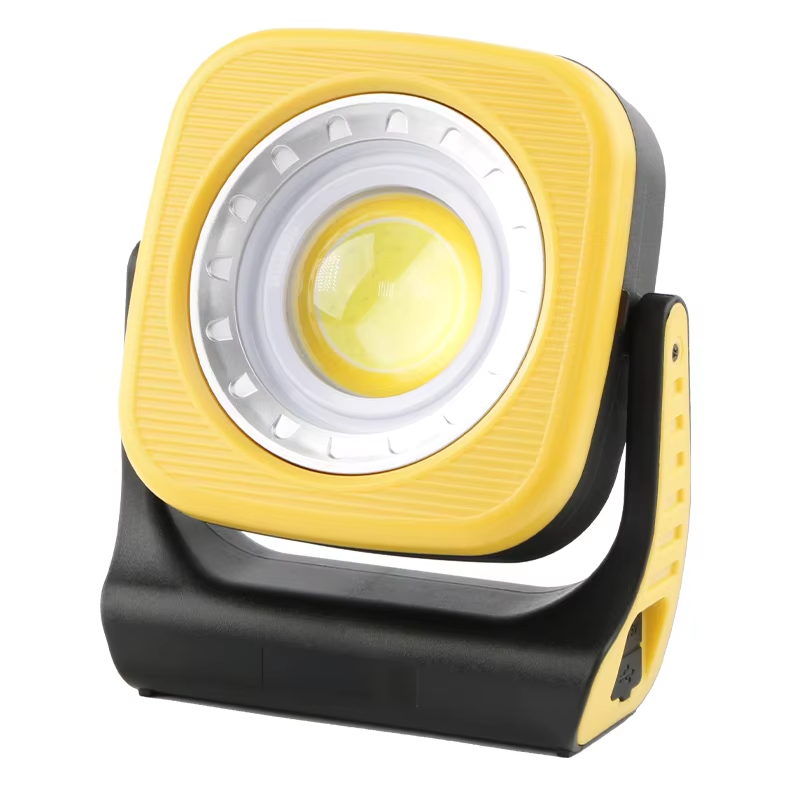
Modern rechargeable work lights utilize advanced LED technology to deliver exceptional brightness while maintaining energy efficiency. High-performance LEDs can produce thousands of lumens while consuming minimal battery power, providing construction teams with brilliant illumination that lasts for extended periods. The latest COB (Chip-on-Board) LED configurations offer uniform light distribution with minimal hot spots, creating more consistent work area lighting that reduces eye strain and improves task visibility.
Professional rechargeable work lights often feature multiple brightness settings, allowing users to optimize light output based on specific task requirements and battery conservation needs. This flexibility enables construction workers to use maximum brightness for detailed work while switching to lower settings for general area lighting or extended operation periods. Some advanced models include automatic dimming features that gradually reduce brightness as battery levels decrease, maximizing operational time.
Beam Pattern and Coverage Options
Construction applications require various lighting patterns depending on the specific task and work environment. Rechargeable work lights are available with different beam configurations, including wide flood patterns for general area illumination, focused spot beams for precision work, and combination patterns that provide both flood and spot coverage. This versatility allows construction teams to select appropriate lighting for diverse applications without requiring multiple specialized fixtures.
Many professional rechargeable work lights feature adjustable heads or rotating mechanisms that enable users to direct light precisely where needed. This adjustability is particularly valuable in construction environments where lighting requirements change frequently throughout a project, allowing workers to optimize illumination without repositioning the entire unit.
Mobility and Mounting Versatility
Portable Design Considerations
The portability advantage of rechargeable work lights extends beyond simple cordless operation to encompass thoughtful design elements that enhance usability in construction environments. Ergonomic handles, balanced weight distribution, and compact form factors make these lights easy to transport between work areas, while integrated carrying cases or storage solutions protect equipment during transport and storage.
Weight optimization is crucial for rechargeable work lights, as construction workers already carry numerous tools and equipment throughout their workday. Manufacturers achieve optimal weight balance by using lightweight yet durable materials and efficient battery designs that provide maximum capacity without excessive bulk. Many professional units weigh less than five pounds while delivering performance comparable to much heavier corded alternatives.
Flexible Mounting Solutions
Construction sites require lighting solutions that can be positioned in various orientations and locations to accommodate changing work conditions. Quality rechargeable work lights incorporate versatile mounting systems including magnetic bases, adjustable stands, hanging hooks, and clamp mechanisms. These mounting options enable workers to position lights hands-free, improving safety and productivity by freeing both hands for construction tasks.
Magnetic mounting bases are particularly valuable for construction applications involving steel structures or metal equipment, providing secure attachment without additional hardware. Adjustable tripod stands offer stable positioning for extended work periods, while integrated hooks enable hanging from scaffolding, structural elements, or temporary supports. This mounting versatility ensures that rechargeable work lights can adapt to virtually any construction scenario.
Cost-Effectiveness and Operational Efficiency
Long-Term Economic Benefits
While the initial investment in quality rechargeable work lights may exceed that of traditional corded alternatives, the long-term cost benefits make them an economically sound choice for construction operations. Eliminating extension cord requirements reduces setup time, decreases trip hazards, and eliminates the need for temporary electrical distribution systems in many applications. These operational efficiencies translate to significant labor cost savings over time.
Energy efficiency is another significant economic advantage, as LED-based rechargeable work lights consume substantially less power than traditional incandescent or halogen alternatives. Lower power consumption extends battery life, reduces charging frequency, and minimizes electricity costs associated with maintaining lighting equipment. Professional-grade units often provide thousands of hours of operation before requiring battery replacement, further reducing long-term ownership costs.
Productivity Improvements
The mobility and flexibility of rechargeable work lights enable construction teams to maintain productivity in situations where traditional lighting solutions would be impractical or impossible. Workers can easily relocate lights to follow work progress, maintain optimal illumination in confined spaces, and continue operations during power outages or electrical system maintenance. This operational continuity prevents costly project delays and maintains work schedule adherence.
Reduced setup and teardown time compared to corded lighting systems allows construction crews to spend more time on productive activities rather than equipment management. The elimination of extension cord routing, power source location, and electrical safety considerations streamlines work area preparation, enabling faster transition between tasks and improved overall project efficiency.
Safety Enhancements in Construction Applications
Elimination of Electrical Hazards
Construction sites present numerous electrical hazards, particularly in wet conditions or environments with exposed conductors. Rechargeable work lights eliminate many of these risks by removing the need for extension cords, reducing the possibility of electrical shock, ground faults, and equipment damage from water exposure. This safety improvement is particularly valuable in outdoor construction projects where weather conditions can create dangerous electrical scenarios.
Battery-powered operation also eliminates the risk of electrical fires caused by damaged cords, overloaded circuits, or improper connections. Professional rechargeable work lights incorporate multiple safety features including overcurrent protection, thermal management, and fail-safe charging systems that prevent dangerous operating conditions. These safety systems provide construction managers with confidence that their lighting equipment will not contribute to workplace accidents or hazards.
Enhanced Visibility and Accident Prevention
Adequate lighting is fundamental to construction site safety, as poor visibility contributes to numerous workplace accidents including falls, cuts, and equipment-related injuries. Rechargeable work lights provide consistent, high-quality illumination that improves hazard visibility and enables workers to perform tasks safely even in challenging lighting conditions. The ability to position lights optimally without cord constraints ensures that critical work areas receive appropriate illumination.
Many professional rechargeable work lights include emergency signaling features such as flashing modes or colored LED options that can be used for hazard marking or emergency communication. These features enhance overall site safety by providing additional warning capabilities during emergency situations or high-risk operations.
FAQ
How long do rechargeable work lights typically operate on a single charge?
Professional rechargeable work lights typically provide 4-12 hours of continuous operation depending on brightness settings and battery capacity. High-efficiency LED models can operate for up to 20 hours on lower brightness settings, while maximum brightness operation usually provides 4-6 hours of runtime. Many units feature multiple brightness levels that allow users to optimize runtime based on specific application requirements.
Are rechargeable work lights suitable for extreme weather conditions?
Quality rechargeable work lights are specifically designed for harsh construction environments and feature comprehensive weather protection including IP65 or IP67 ratings. These units can operate effectively in temperatures ranging from -20°F to 120°F and provide reliable performance in rain, snow, dust, and high humidity conditions. Professional-grade models undergo rigorous testing to ensure consistent operation in extreme weather scenarios commonly encountered in construction applications.
What maintenance requirements do rechargeable work lights have?
Rechargeable work lights require minimal maintenance compared to traditional lighting solutions. Regular cleaning of lens surfaces and charging contacts maintains optimal performance, while periodic inspection of seals and housing ensures continued weather protection. Battery maintenance involves avoiding complete discharge cycles and storing units at partial charge levels during extended periods of non-use. Most professional units provide 3-5 years of reliable service with proper care.
Can rechargeable work lights replace traditional corded lighting for all construction applications?
While rechargeable work lights excel in most construction applications, some scenarios may still benefit from corded solutions. Extended operations requiring continuous lighting for multiple shifts may favor corded systems, though high-capacity rechargeable work lights with rapid charging capabilities are increasingly viable for these applications. The choice depends on specific project requirements, power availability, and operational preferences, but rechargeable options now meet the majority of construction lighting needs effectively.
Table of Contents
- Advanced Battery Technology in Modern Work Lighting
- Durability Features for Construction Environments
- Illumination Performance and Light Distribution
- Mobility and Mounting Versatility
- Cost-Effectiveness and Operational Efficiency
- Safety Enhancements in Construction Applications
-
FAQ
- How long do rechargeable work lights typically operate on a single charge?
- Are rechargeable work lights suitable for extreme weather conditions?
- What maintenance requirements do rechargeable work lights have?
- Can rechargeable work lights replace traditional corded lighting for all construction applications?
