 EN
EN


When working in cold weather conditions, staying warm while maintaining visibility becomes a critical challenge for outdoor workers, maintenance crews, and winter laborers. Beanie hats have emerged as a practical solution, especially when integrated with hands-free lighting technology. The combination of thermal protection and integrated LED illumination makes beanie hats an increasingly popular choice across construction sites, emergency response operations, and seasonal outdoor work environments. Understanding why beanie hats have gained this popularity requires examining the practical demands of cold weather jobs and how modern beanie hats address multiple worker needs simultaneously.
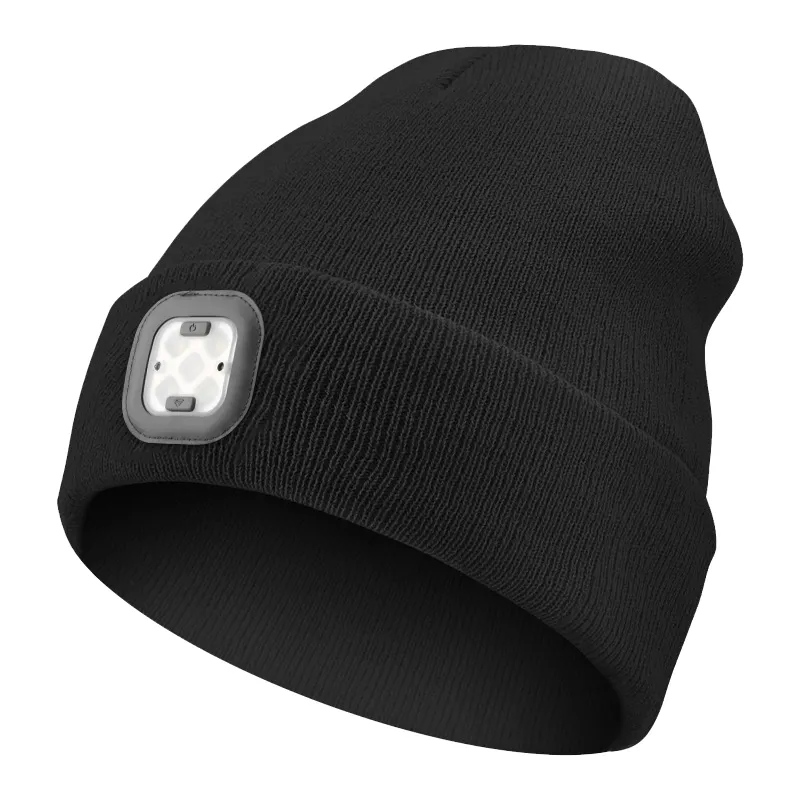
The popularity of beanie hats in industrial and outdoor work settings reflects a fundamental shift toward integrated safety equipment that solves multiple operational problems at once. Workers need warmth, visibility, and mobility simultaneously, especially when performing tasks that demand both hands. Beanie hats equipped with LED technology deliver all three benefits without requiring workers to juggle flashlights, hardhats with attached lights, or other cumbersome alternatives. This integration of function and practicality has driven rapid adoption across industries where cold weather performance directly impacts both worker safety and job efficiency.
Thermal Protection Meets Visibility Demands
The Challenge of Cold Weather Work Environments
Cold weather jobs present unique operational constraints that standard equipment often fails to address comprehensively. When outdoor workers face temperatures below freezing, maintaining cognitive function, dexterity, and focus becomes progressively difficult as core body temperature drops. Beanie hats play a crucial role in thermal regulation because the human head loses a disproportionate amount of body heat when exposed to cold air. Traditional beanie hats have long solved this thermal problem, but they leave workers dependent on flashlights or helmet-mounted lights that either tie up hands or create visibility dead zones directly in front of the worker's head.
Integrated Lighting as a Hands-Free Solution
The innovation of integrating LED lights directly into beanie hats eliminates the hands-free lighting gap that has plagued cold weather work for decades. Beanie hats with built-in LED lights position the light source at eye level and aim it forward naturally as the worker's head moves, ensuring that the work surface directly ahead stays illuminated without manual adjustment. This hands-free lighting capability transforms beanie hats from simple thermal garments into active safety equipment. Workers can maintain full hand availability for gripping tools, securing equipment, or performing technical tasks while the integrated LED lights automatically illuminate their work area.
Safety and Productivity Impact
Accident Prevention Through Enhanced Visibility
Visibility directly correlates with workplace accident rates in cold weather environments where darkness falls early and task visibility remains marginal. When workers wear beanie hats equipped with LED lighting, the combination of consistent illumination and hands-free operation reduces trip hazards, prevents tool-related injuries, and improves awareness of surrounding obstacles. Beanie hats with integrated lights create a personal visibility zone that moves with the worker, ensuring that attention is directed exactly where the hands are working. This synchronized visibility significantly reduces the fumbling and missed steps that characterize work environments where workers struggle to balance lighting equipment with task completion.
Work Efficiency and Task Completion
Operational efficiency in cold weather jobs depends heavily on minimizing task time and maintaining continuous motion to preserve body heat. Beanie hats that incorporate hands-free lighting allow workers to complete tasks without stopping to adjust lighting or secure additional equipment. The time savings from avoiding flashlight management quickly accumulate across a full workday, especially for jobs requiring detailed manual work in low-light conditions. Beanie hats eliminate the cognitive load of managing separate lighting tools, allowing workers to focus fully on task execution rather than equipment logistics. For seasonal work with compressed schedules, this productivity gain becomes economically significant.
Practical Advantages Across Work Scenarios
Compatibility with Existing Safety Gear
One reason beanie hats have become so popular relates to their seamless compatibility with mandatory cold weather protective equipment. Hard hats, earpieces, goggles, and face shields all work effectively with beanie hats, whereas clip-on lights and helmet-mounted alternatives often create interference, weight distribution problems, or visibility obstruction. Beanie hats can be worn comfortably under or over other head protection depending on work protocols, and their lightweight construction adds minimal thermal burden when layered. This compatibility means that workers can adopt beanie hats without redesigning entire personal protective equipment systems or facing resistance from safety departments.
Durability and Sustained Performance
Cold weather conditions test equipment durability severely, with moisture, ice formation, temperature fluctuation, and contact wear all accelerating degradation. Quality beanie hats designed for work environments use robust acrylic or wool blends that withstand repeated washing and extended outdoor exposure without deteriorating. The LED lights integrated into beanie hats are sealed against moisture and calibrated to maintain consistent illumination across wide temperature ranges. Because beanie hats remain in direct contact with the worker's head throughout the shift, they provide reliable performance without the vibration, loosening, or accidental disconnection that can affect clip-on or strap-mounted lights. This reliability makes beanie hats a trusted choice for mission-critical work where equipment failure creates direct safety consequences.
FAQ
Are beanie hats with LED lights suitable for all cold weather jobs?
Beanie hats work well for most outdoor and cold weather applications, but specific job requirements affect suitability. Tasks requiring high-intensity overhead lighting may demand additional lighting sources beyond what beanie hats provide. However, for general construction, maintenance, emergency response, and utility work in cold conditions, beanie hats deliver adequate illumination for hands-free task completion. Workers should assess lighting intensity requirements and task proximity before relying solely on beanie hats for illumination.
How long do the LED lights in beanie hats typically last?
Modern LED lights integrated into beanie hats typically provide 50 to 100 hours of continuous operation on standard batteries, depending on brightness setting and battery capacity. Most beanie hats use rechargeable or replaceable batteries that fit easily inside the hat structure without creating bulk or discomfort. The actual working life depends on daily use patterns, with many workers finding that a single charge sustains an entire work shift. Battery replacement and light module maintenance remain relatively simple, making beanie hats cost-effective for extended cold weather seasons.
Do beanie hats provide enough warmth for extreme cold conditions?
Beanie hats offer substantial thermal protection, reducing heat loss from the head and contributing to overall body temperature regulation. However, in extreme cold below minus 20 degrees Fahrenheit, beanie hats typically work best as part of a comprehensive layering strategy rather than as standalone protection. Workers in extreme conditions should combine beanie hats with face masks, neck warmers, and insulated jackets to maintain safe core temperatures. The integrated LED lighting in beanie hats makes them valuable additions to extreme cold kits precisely because they eliminate the need to remove gloves to manage separate flashlights.
