 EN
EN

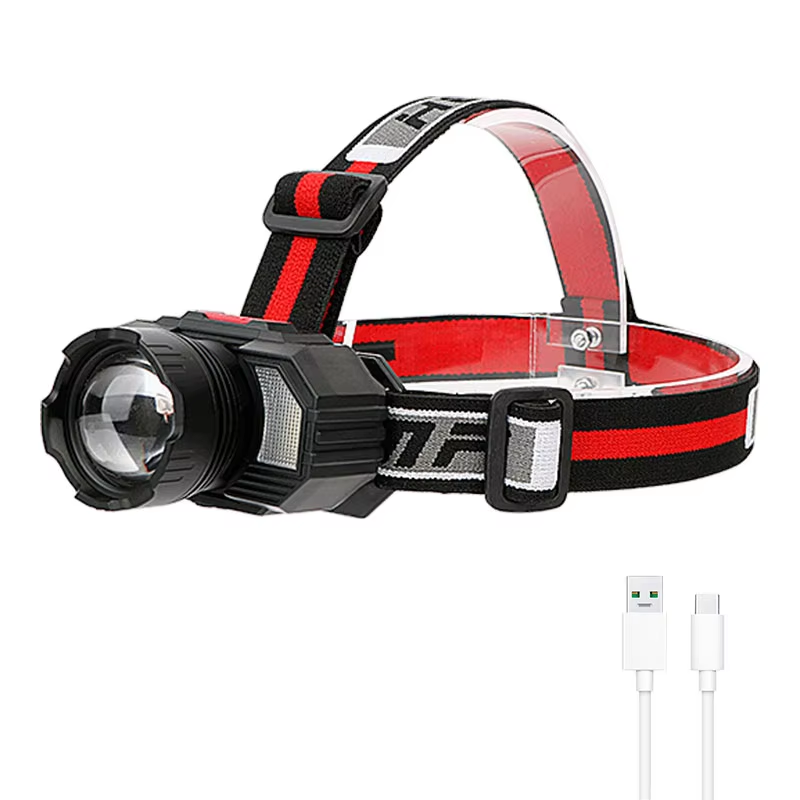
When professionals operate in underground tunnels, collapsed structures, or confined industrial spaces, reliable hands-free lighting is not a luxury — it is a fundamental safety requirement. The LED headlamp has become the dominant lighting solution across mining, rescue, and inspection operations precisely because it addresses the core challenges these environments present: darkness, restricted movement, physical hazards, and the critical need for immediate visibility without occupying the user's hands.
The widespread adoption of the LED headlamp across these high-stakes industries is not accidental. It reflects a convergence of technological advancement, operational practicality, and safety compliance. Understanding exactly why the LED headlamp has displaced older lighting tools — and why it continues to dominate — requires a closer look at the specific demands of mining, rescue, and industrial inspection work, and how modern LED headlamp design responds to each of those demands with precision.
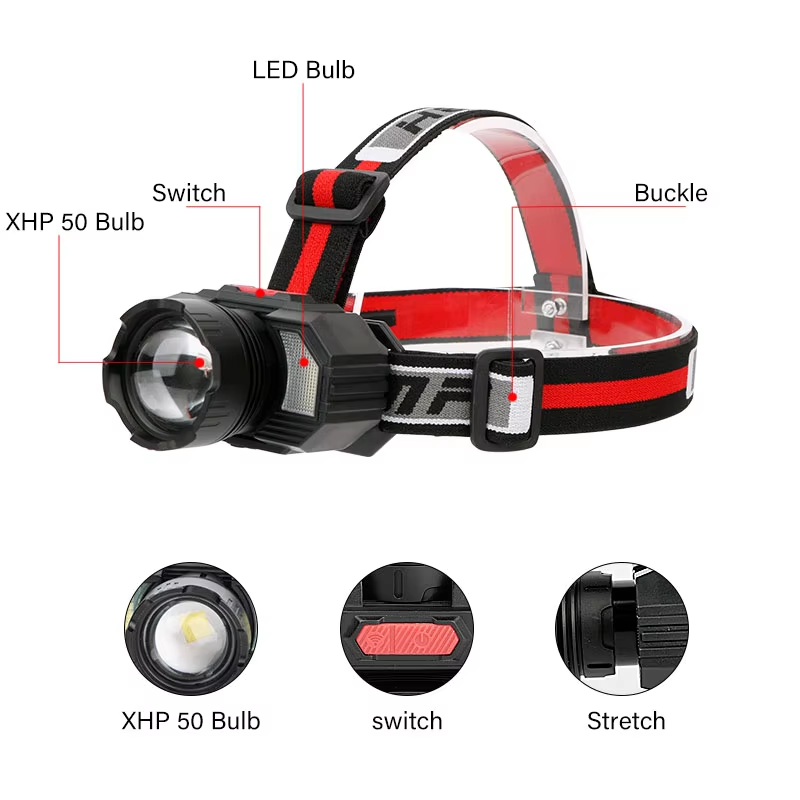
The Operational Demands That Drive LED Headlamp Adoption
Hands-Free Illumination as a Non-Negotiable Requirement
Mining personnel, emergency responders, and inspection technicians all share one critical constraint: their hands must remain free to operate tools, handle equipment, navigate terrain, or assist victims. A handheld torch, no matter how powerful, introduces dangerous trade-offs in these scenarios. The LED headlamp eliminates that trade-off entirely by mounting directly to a helmet or head harness, directing light precisely where the user is looking without requiring any manual control.
In underground mining environments, workers may be operating drilling equipment, supporting tunnel structures, or monitoring ventilation systems — all of which demand full bilateral dexterity. An LED headlamp worn on the helmet ensures that the worker always has sufficient illumination in their immediate line of sight, reducing the risk of missteps, tool mishandling, and collision with unseen obstacles. This hands-free functionality is one of the most fundamental reasons the LED headlamp has become standard-issue equipment in the sector.
Search and rescue operations place an even higher premium on this capability. First responders navigating rubble fields, flooded passages, or smoke-filled structures cannot afford to manage a separate light source. The LED headlamp provides consistent, directional illumination that tracks with head movement, allowing rescuers to scan environments rapidly and react without hesitation. Every second saved in a rescue scenario is directly linked to survival probability, and the LED headlamp contributes meaningfully to that time efficiency.
Harsh Environment Tolerance and Durability
Mining shafts and emergency sites are not controlled environments. They expose equipment to extreme dust, moisture, mechanical vibration, and temperature variation. Earlier generations of incandescent headlamps were fragile — filaments would break under vibration, glass components would crack, and moisture infiltration would cause failures at the worst possible moments. The LED headlamp, by contrast, is constructed around solid-state light-emitting diodes that have no filaments, no glass envelopes, and no moving parts susceptible to physical shock.
Modern LED headlamp designs incorporate IP-rated dust and water resistance, typically achieving IP65 or higher certification for industrial and mining applications. This means the unit can withstand high-pressure water jets, fine particulate matter, and sustained immersion in some configurations. For rescue operations involving flooding, collapsed structures, or chemical spill environments, this resilience is not a desirable feature — it is a mandatory one. The LED headlamp's durability directly contributes to operational continuity in environments where equipment failure carries life-threatening consequences.
The structural robustness of a quality LED headlamp also reduces total cost of ownership for mining and industrial operators. Fewer replacements, less maintenance downtime, and greater equipment lifespan translate directly into lower operational costs. For organizations managing large fleets of portable lighting equipment, the durability advantage of the LED headlamp represents a significant procurement and logistics benefit beyond the immediate performance gains.
Energy Efficiency and Battery Performance in Critical Operations
Why Runtime Matters More Than Raw Brightness
In surface environments, lighting duration is a convenience factor. In underground mining or extended rescue operations, it becomes a survival variable. If an LED headlamp fails mid-operation due to battery depletion, the consequences range from operational disruption to genuine danger. This is why the energy efficiency profile of LED technology is so fundamentally important to professional adoption — not just because it saves power costs, but because it directly extends the safe operational window of every user wearing the device.
LED technology converts a significantly higher proportion of electrical energy into light compared to incandescent or halogen alternatives. This efficiency means that the same battery capacity delivers substantially longer runtime in an LED headlamp. For miners working extended shifts, or rescue teams operating through long search cycles, the ability to sustain illumination for eight, twelve, or even twenty hours without recharging can be the difference between completing a mission safely and being forced into dangerous improvisation.
Many professional-grade LED headlamp models now incorporate multi-mode output systems that allow users to adjust brightness based on task requirements. High-lumen output is reserved for wide-area scanning or navigation through complex terrain, while reduced modes extend battery life during sustained close-range work. This adaptive power management capability makes the LED headlamp a genuinely intelligent tool rather than a simple on-off device.
USB Rechargeability and Power Display Features
The integration of USB rechargeable battery systems into the LED headlamp marks a significant operational advancement for field teams. Unlike proprietary battery formats that require specialized chargers and supply chain management, USB rechargeable units can be replenished using standard power banks, vehicle USB ports, or solar charging systems in remote locations. This flexibility is particularly valuable for rescue teams deployed in disaster zones where conventional infrastructure may be disrupted.
Power display functionality — showing remaining battery percentage directly on the LED headlamp unit — adds another layer of operational safety. Users can monitor their power status in real time and make informed decisions about when to switch modes, swap batteries, or begin returning to a safe zone. This feature eliminates the dangerous scenario of unexpected battery failure in a dark or hazardous environment and brings an element of predictability to operations that are otherwise defined by uncertainty.
For mining operations specifically, the combination of USB recharging and power monitoring transforms battery management from a reactive maintenance task into a proactive operational discipline. Site managers can establish clear recharging protocols, monitor equipment readiness, and ensure that no worker enters an underground environment with an LED headlamp that lacks sufficient charge to cover the planned shift duration.
Optical Performance Suited to Variable Working Conditions
Zoomable Beam Technology for Task-Specific Lighting
Not all underground or inspection tasks require the same type of illumination. A miner assessing the integrity of a tunnel ceiling needs a wide flood beam that illuminates a broad area. An inspector examining a specific joint or weld in a pipeline needs a focused spot beam that concentrates light on a small, precise area. The LED headlamp equipped with zoomable beam technology addresses both requirements within a single compact device, reducing the need for workers to carry multiple lighting tools.
Zoomable optics in the LED headlamp allow users to shift from wide-angle flood illumination to a tight, long-throw spot beam by physically adjusting the lens assembly. This versatility makes the LED headlamp suitable across a broader range of tasks within a single work session, improving operational flexibility without adding weight or equipment complexity. In rescue scenarios, the ability to quickly switch from a wide search beam to a focused directional beam when a victim is located can meaningfully improve response speed and accuracy.
High-power LED emitters further enhance the optical capabilities of modern headlamp designs. Advanced LED chips deliver lumen outputs that far exceed what was achievable with earlier portable lighting technologies, enabling effective illumination at distances and in conditions that previously required larger, heavier equipment. The LED headlamp has, in this sense, compressed the capability of a professional lighting system into a helmet-mounted form factor that imposes no burden on the wearer.
Directional Light That Follows the Worker's Focus
A stationary light source illuminates a fixed area, which may or may not coincide with where a worker needs to see at any given moment. The LED headlamp changes this dynamic entirely by making the light source an extension of the user's own gaze direction. As the worker turns their head to assess a wall, inspect a pipe joint, or navigate a tight passage, the light moves with them. This seemingly simple feature has profound implications for both productivity and safety in complex environments.
In underground inspection work, technicians are often required to assess surfaces and components that are positioned awkwardly relative to the body. An LED headlamp eliminates the need to contort the body to position a handheld light, allowing the inspector to maintain a stable, ergonomically sound posture while directing illumination precisely where it is needed. This reduces physical fatigue over long inspection shifts and improves the quality and accuracy of the visual assessment being performed.
Emergency responders working in structurally compromised buildings or confined rescue channels benefit from the same directional advantage. When physical space does not permit wide body movement, head mobility is often the only reliable means of redirecting attention. An LED headlamp worn at helmet level ensures that this head mobility translates directly into redirected illumination, maintaining effective visibility in the most constrained operational scenarios.
Safety Standards, Compliance, and Industry Trust
Explosion-Proof and Intrinsically Safe Certifications
Underground mining environments frequently contain flammable gases, coal dust, or other ignitable materials that create explosion hazards. In these conditions, any electrical device must meet stringent intrinsic safety or explosion-proof certification standards before it is permitted for use. The LED headlamp designed for mining applications is specifically engineered to comply with these standards, with circuit designs that prevent any spark or thermal event that could ignite a hazardous atmosphere.
Certification compliance is not merely a regulatory formality — it is a fundamental trust signal for procurement officers and safety managers in the mining industry. When an LED headlamp carries recognized safety certifications for hazardous locations, it confirms that the product has been independently tested and validated against the specific risks present in the deployment environment. This compliance documentation is typically a prerequisite for procurement in regulated mining operations worldwide.
For rescue and inspection teams operating in refineries, chemical plants, or gas processing facilities, the same explosion safety requirements apply. An LED headlamp built to intrinsic safety standards ensures that the illumination tool itself does not introduce new ignition risk into an already hazardous environment. This ability to operate safely in gas-rich or dust-heavy atmospheres is one of the clearest demonstrations of why the LED headlamp has become the preferred choice over alternatives that cannot meet these certification requirements.
Ergonomic Design and Helmet Integration
Professional use of an LED headlamp over an extended shift requires more than optical and electrical performance — it requires ergonomic design that prevents discomfort, fatigue, and distraction. Modern mining and industrial LED headlamp units are designed with weight distribution in mind, placing heavier battery components at the rear of the head harness or helmet mount to counterbalance the front-mounted light assembly. This balance reduces neck strain during long wear periods and allows workers to maintain full head mobility without compensating for awkward weight distribution.
Helmet-mounted LED headlamp designs that integrate directly with standard safety helmets are particularly valued in the mining sector. Dedicated mounting rails and clip systems allow the LED headlamp to be secured firmly to the helmet without modification, ensuring that the light unit does not shift or detach under the vibration and movement typical of underground work. This secure integration also ensures that the beam angle remains consistent with the worker's line of sight throughout the shift.
Adjustable headbands and tilt mechanisms on standalone LED headlamp models provide a similar benefit, allowing users without helmets — such as search and rescue personnel in certain deployment configurations — to fine-tune the vertical beam angle independently of head position. This level of positional control further enhances the practical utility of the LED headlamp across the diverse operational scenarios encountered in professional field work.
FAQ
What makes an LED headlamp more suitable for mining than a regular torch?
An LED headlamp provides hands-free illumination that tracks with the worker's line of sight, leaving both hands free for equipment operation and physical tasks. It also offers superior durability against vibration and moisture, longer battery runtime, and the ability to meet explosion-proof and intrinsic safety certifications required in underground mining environments. A regular torch lacks these combined advantages and introduces the risk of dropping or misplacing the light source in hazardous conditions.
How long can an LED headlamp typically operate on a single charge in field conditions?
Runtime varies significantly based on the brightness mode selected and the battery capacity of the specific LED headlamp model. High-quality mining and industrial LED headlamp units typically offer between eight and twenty hours of continuous operation on a full charge when used in standard output modes. Units with power display functionality allow users to monitor remaining battery life accurately and switch to lower-output modes to extend runtime when necessary.
Are LED headlamps with USB charging reliable enough for remote rescue deployments?
Yes. USB rechargeable LED headlamp models are specifically valued in remote rescue deployments because they can be recharged using widely available power sources including power banks, vehicle USB ports, and portable solar panels. This flexibility eliminates dependency on fixed charging infrastructure, which is often unavailable in disaster zones or remote mining sites. Models designed for professional field use also incorporate battery management protection to prevent overcharging and extend battery lifespan.
What is the significance of a zoomable beam in an LED headlamp for inspection work?
A zoomable beam allows the LED headlamp user to switch between wide flood illumination and a focused spot beam within a single device. For inspection professionals, this means the same LED headlamp can illuminate broad areas during initial surveys and then concentrate light on specific components, joints, or surfaces during detailed examination. This versatility reduces the need to carry multiple lighting tools and allows technicians to adapt their illumination to the precise requirements of each inspection task without interrupting their workflow.
Table of Contents
- The Operational Demands That Drive LED Headlamp Adoption
- Energy Efficiency and Battery Performance in Critical Operations
- Optical Performance Suited to Variable Working Conditions
- Safety Standards, Compliance, and Industry Trust
-
FAQ
- What makes an LED headlamp more suitable for mining than a regular torch?
- How long can an LED headlamp typically operate on a single charge in field conditions?
- Are LED headlamps with USB charging reliable enough for remote rescue deployments?
- What is the significance of a zoomable beam in an LED headlamp for inspection work?
