 EN
EN

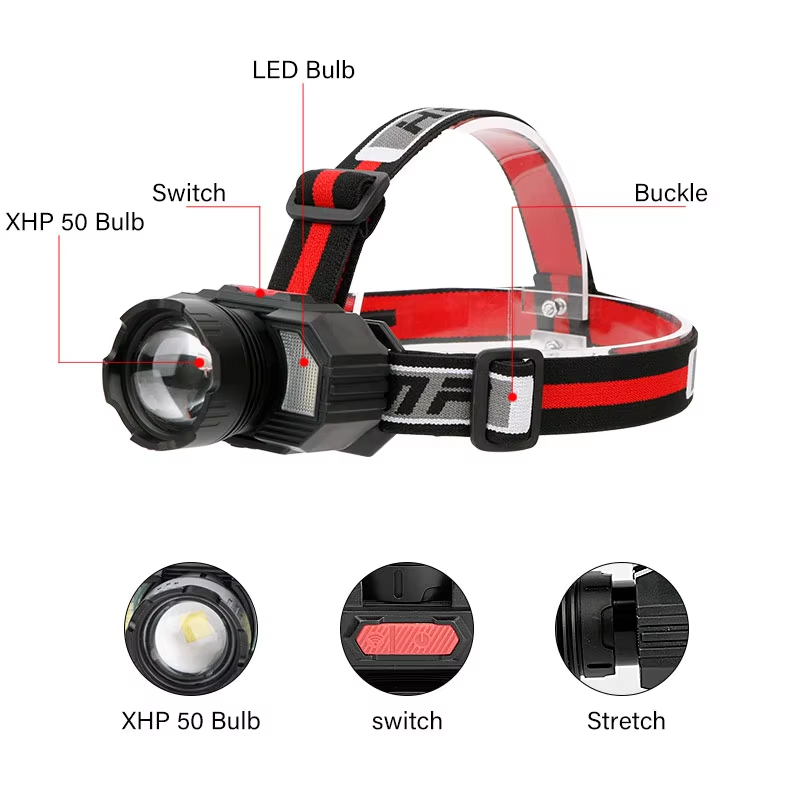
In demanding work environments like underground mines and active construction sites, reliable lighting is not optional — it is essential. A rechargeable headlamp has become one of the most trusted tools across both industries, and for good reason. Workers depend on consistent, powerful illumination to stay safe, productive, and mobile in environments where fixed lighting simply cannot reach every corner.
The widespread adoption of the rechargeable headlamp in mining and construction is driven by a combination of practical engineering, economic advantage, and occupational safety standards. Understanding why this particular device has displaced older lighting solutions reveals how much the right equipment can transform dangerous, low-visibility workspaces into manageable, efficient environments. This article explores the core reasons behind the rechargeable headlamp's dominance in these two critical fields.
Safety and Hands-Free Operation in High-Risk Environments
Keeping Both Hands Available at All Times
One of the most fundamental reasons why the rechargeable headlamp is indispensable in mining and construction is its hands-free design. Workers must constantly handle tools, climb ladders, operate machinery, and navigate uneven terrain. Holding a flashlight in such conditions creates unnecessary risk. The rechargeable headlamp mounts directly to a helmet or headband, directing light precisely where the worker looks without requiring any manual effort. This design advantage alone significantly reduces accident risk in environments where split-second reactions matter.
In mining tunnels especially, where passages are narrow and surfaces are irregular, a rechargeable headlamp allows full situational awareness. The worker can assess structural conditions, read equipment gauges, and signal to colleagues while keeping both hands entirely free. Construction sites above ground benefit equally, particularly during nighttime pours, early-morning framework tasks, or work inside confined structures where ambient lighting fails to penetrate.
Built-In Safety Features for Industrial Use
A professional-grade rechargeable headlamp designed for mining and construction is typically engineered to withstand extreme conditions. Many models carry ratings for water resistance, dust protection, and impact durability — all critical factors in environments where exposure to debris, moisture, and physical shock is routine. The rechargeable headlamp also often includes power display indicators, allowing workers to monitor remaining battery life and avoid sudden blackouts in dangerous zones. This level of operational transparency is something disposable battery lights simply cannot match.
Sustained Power and Cost Efficiency Over Time
Why Rechargeability Changes the Economics of Site Lighting
The rechargeable headlamp offers a compelling economic argument for large-scale operations. Mining companies and construction firms often operate fleets of dozens or even hundreds of workers simultaneously. When every worker depends on personal lighting, the cumulative cost of disposable batteries becomes substantial. A rechargeable headlamp eliminates this recurring expenditure by relying on built-in lithium-ion or similar rechargeable cells that can be replenished via USB or dedicated charging docks between shifts.
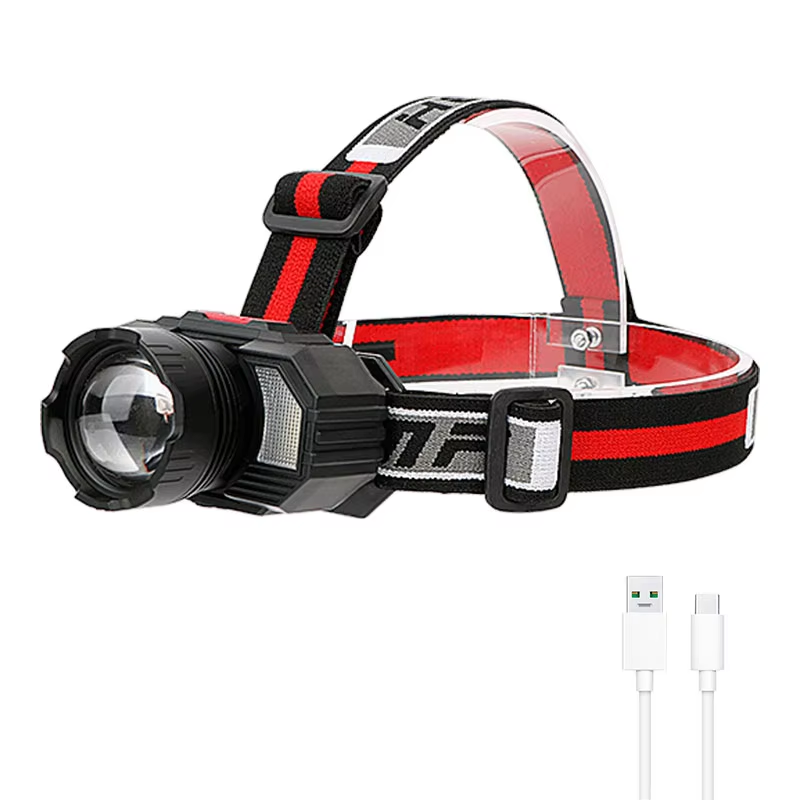
This shift also reduces logistical burden. Site managers no longer need to maintain battery stockpiles or schedule emergency resupply runs. A rechargeable headlamp simply charges overnight and is ready for the next shift. For operations running 24-hour cycles, multiple rechargeable headlamp units can be rotated to ensure no worker is ever caught without illumination. The long-term savings in procurement, storage, and waste disposal make the rechargeable headlamp a financially sound investment for any serious industrial operation.
High-Lumen Output Matched to Professional Demands
Modern LED technology has elevated what a rechargeable headlamp can deliver in terms of brightness and beam control. High-power rechargeable headlamp models used in mining can produce output levels that illuminate wide tunnel sections or focus tightly on a specific work point. Many rechargeable headlamp units now include zoomable or adjustable beam functions, letting workers switch between flood and spotlight modes based on the task. This flexibility is critical in construction, where one moment a worker needs broad area coverage and the next requires a concentrated beam to inspect a joint or fitting.
Adaptability Across Mining and Construction Applications
Versatile Use Cases Across Both Industries
The rechargeable headlamp is not a single-purpose tool. In mining, a rechargeable headlamp serves during excavation, equipment inspection, emergency response, and geological assessment. In construction, the rechargeable headlamp is equally at home during foundation work, interior finishing, electrical routing, and rooftop installation. Because the rechargeable headlamp attaches to standard hard hats or helmets, integration into existing personal protective equipment systems is seamless. Workers do not need to modify their gear or carry additional bags — the rechargeable headlamp simply becomes part of the standard kit.
The rechargeable headlamp is also valued for its portability. Unlike fixed floodlights that require power cables and positioning, a rechargeable headlamp moves with the worker. In rapidly changing construction sites where the layout evolves daily, mobile lighting via a rechargeable headlamp is far more adaptive than static installations. For underground mining operations where grid power access is limited, the rechargeable headlamp's self-contained power source is not just convenient — it is operationally critical.
Compliance and Standardization in Professional Settings
Occupational safety regulations in many countries now include specific requirements for personal lighting in underground and low-visibility work environments. The rechargeable headlamp, especially when it includes power display, impact resistance, and certified brightness levels, helps companies meet these compliance standards without excessive cost. Procurement teams increasingly specify the rechargeable headlamp as standard-issue equipment because it consolidates safety performance and administrative simplicity into a single dependable device.
FAQ
How long does a rechargeable headlamp last on a single charge?
Most professional rechargeable headlamp units designed for mining and construction offer between four and twelve hours of runtime depending on brightness mode. High-power modes consume charge faster, while lower settings extend battery life significantly. Always check the power display before beginning a shift to ensure the rechargeable headlamp has sufficient charge for the full work period.
Can a rechargeable headlamp be used in explosive or hazardous atmospheres?
Certain mining environments classified as hazardous zones require intrinsically safe equipment. If your work area involves explosive gases or combustible dust, you must select a rechargeable headlamp that carries the appropriate intrinsic safety certification for that zone classification. Not all rechargeable headlamp models are rated for explosive atmospheres, so always verify the product specifications before deployment in such areas.
What charging method is most practical for site use?
USB charging is the most widely used method for a rechargeable headlamp on construction and mining sites today. It allows workers to charge using standard power banks, site generators, or wall adapters with equal ease. Some rechargeable headlamp models support magnetic charging docks, which enable rapid multi-unit charging between shifts. Choosing a rechargeable headlamp with a USB-C or micro-USB port ensures broad compatibility with available charging infrastructure on virtually any modern work site.
