 EN
EN

Safety concerns in both residential neighborhoods and commercial properties have intensified in recent years, driving facility managers, homeowners, and business owners to seek smarter, more energy-efficient solutions. The motion solar sensor light has emerged as a highly practical answer to this growing demand. By combining renewable solar energy with intelligent motion detection technology, these fixtures deliver reliable illumination precisely when and where it is needed most — without dependence on grid power or complex wiring infrastructure.
To answer the central question directly: yes, a motion solar sensor light can significantly enhance safety in both residential and commercial environments. The mechanism behind this improvement is grounded in deterrence, visibility, and response efficiency. When unexpected movement is detected, the light activates instantly, creating a well-lit zone that discourages unauthorized activity, prevents accidents, and alerts occupants to potential threats. This article explores how and why these lights deliver measurable safety benefits across different deployment scenarios.
Understanding How a Motion Solar Sensor Light Works
The Core Technology Behind Motion-Activated Solar Lighting
A motion solar sensor light integrates three primary systems into a single housing: a photovoltaic solar panel, a rechargeable battery, and a passive infrared (PIR) or microwave motion sensor. During daylight hours, the solar panel charges the battery, storing enough energy to power the light through the night. When the motion sensor detects heat signatures or movement within its detection range, the light activates immediately, flooding the area with bright illumination.
The detection sensitivity and activation range can typically be adjusted to suit specific environments. In a residential driveway, for example, the sensor might be calibrated to respond to human movement within a 5 to 10-meter range, while a commercial parking lot might require a wider detection zone covering 15 meters or more. This flexibility makes the motion solar sensor light adaptable to a broad variety of installation scenarios without requiring complicated hardware changes.
Modern units also incorporate multiple lighting modes, such as a dim standby mode that preserves battery charge while keeping the area dimly lit, transitioning to full brightness when motion is detected. This intelligent energy management ensures the light remains functional throughout the night even in regions with limited daily sunlight exposure.
Lighting Modes and Their Safety Implications
Many advanced motion solar sensor light models offer three or more programmable lighting modes, each designed to optimize either safety or energy conservation depending on the environment. A full-brightness activation mode triggers 100% luminous output immediately upon detecting movement, which is ideal for high-risk zones such as entry gates, loading docks, or perimeter fences. A medium-brightness standby mode keeps a moderate level of light active throughout the night to maintain general visibility, then surges to full output when motion is detected.
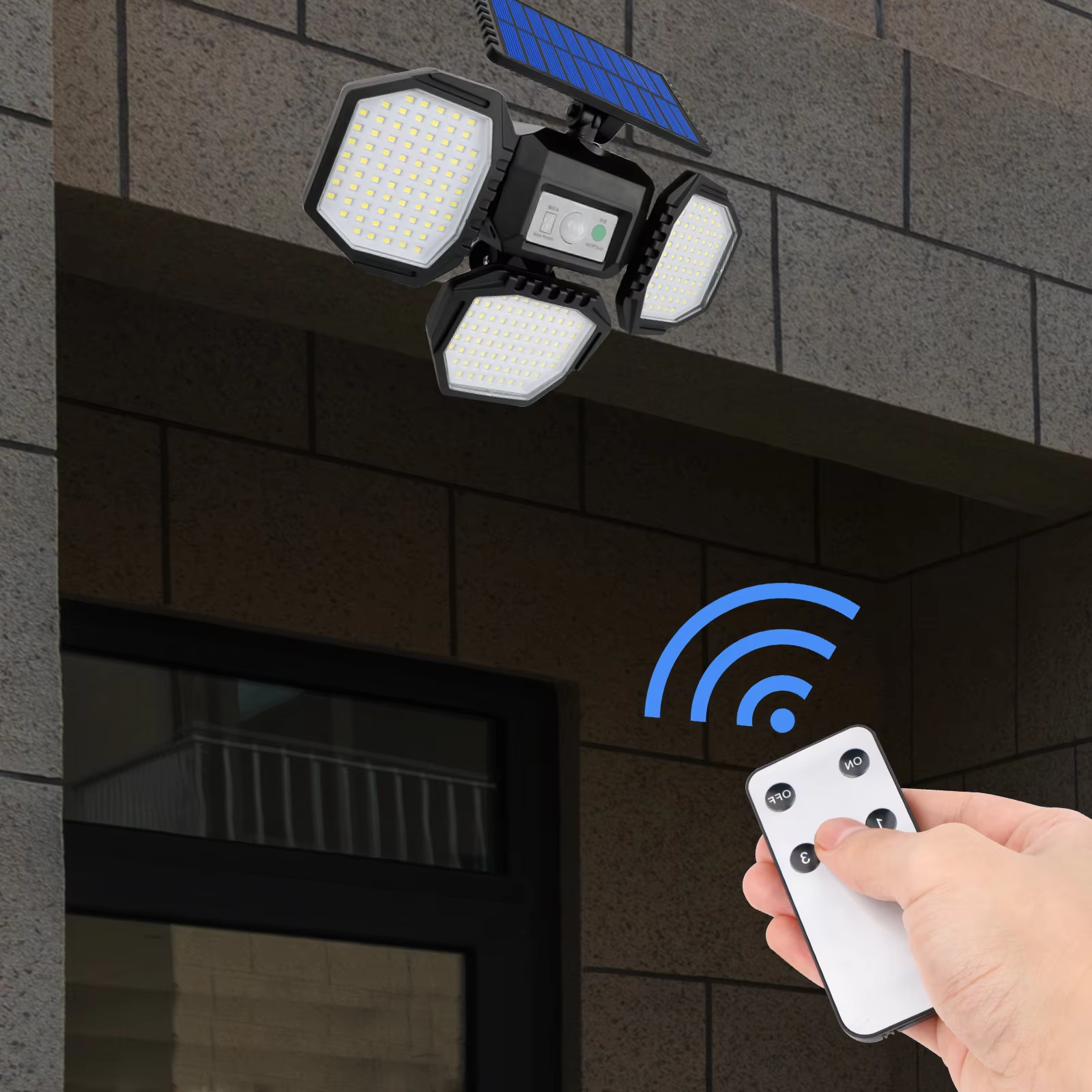
Remote control functionality, available in models such as the motion solar sensor light designed for parking lots and garden streets, allows facility managers or homeowners to switch between modes without climbing a ladder or accessing the fixture directly. This operational convenience is particularly valuable in commercial settings where lighting requirements may change based on seasonal activity or security protocols.
Safety Benefits in Residential Areas
Deterring Intrusion and Unauthorized Access
One of the most well-documented safety benefits of a motion solar sensor light in residential settings is its deterrent effect on intruders. Sudden, bright illumination is psychologically unsettling to anyone approaching a property with unauthorized intent. Studies in crime prevention consistently indicate that well-lit properties are significantly less likely to be targeted by burglars or vandals compared to dark, unmonitored areas.
A motion solar sensor light placed at entry points such as front doors, back gates, side passages, and garage entrances creates a layered security perimeter that activates only when triggered, conserving energy while maximizing deterrence. The unpredictability of the activation — the light does not follow a timer-based pattern that intruders could observe and plan around — adds an additional layer of unpredictability that enhances its effectiveness as a security measure.
Unlike continuously burning security lights that can be visually ignored after prolonged exposure, the sudden activation of a motion solar sensor light draws immediate attention — from neighbors, passing vehicles, or indoor occupants — which further compounds the deterrent effect.
Preventing Accidental Injuries at Night
Safety in residential environments is not only about preventing crime. Slip-and-fall accidents on unlit pathways, driveways, and garden steps represent a genuine and often overlooked risk, particularly for elderly residents or households with young children. A motion solar sensor light that activates the moment someone steps outside eliminates the need to fumble for a light switch or navigate in darkness, dramatically reducing the probability of trips and falls.
For properties with irregular terrain, outdoor staircases, or sloped driveways, this practical safety function is arguably more impactful on a day-to-day basis than the intrusion deterrence aspect. Homeowners who install a motion solar sensor light along walkways report immediate improvements in nighttime navigation comfort for household members of all ages.
Safety Benefits in Commercial and Industrial Settings
Securing Parking Lots and Loading Zones
Commercial facilities present a different set of safety challenges compared to residential properties. Parking lots, in particular, are high-risk zones due to their large surface area, vehicle movement, and periods of low foot traffic. A well-deployed motion solar sensor light system in a commercial parking lot creates a dynamic lighting environment that responds to actual activity patterns rather than remaining fixed at a constant luminosity level.
When employees return to their vehicles late at night or when delivery trucks arrive at odd hours, the motion solar sensor light activates precisely in those zones where movement occurs, ensuring that workers and drivers always operate in a well-lit environment. This directly reduces vehicle-pedestrian collision risks and minimizes the likelihood of theft or personal assault in low-traffic areas.
For facility managers responsible for large commercial properties, the solar-powered nature of these lights means installation does not require trenching cables across paved surfaces or modifying electrical infrastructure — a significant cost and time advantage during deployment or expansion phases.
Enhancing Perimeter Security for Commercial Properties
Perimeter security is a top priority for warehouses, manufacturing plants, retail complexes, and logistics hubs. A strategically positioned motion solar sensor light along fence lines, at access points, and near storage areas creates a responsive security barrier that signals activity in real time. Security personnel on patrol benefit from instant illumination in zones they are approaching, improving their situational awareness and personal safety.
The off-grid nature of a motion solar sensor light also means that power outages — which often accompany targeted intrusion attempts that involve cutting utility connections — do not disable the security lighting system. This resilience is a critical advantage in high-value commercial environments where continuous perimeter visibility is non-negotiable.
Furthermore, recorded security footage captured during nighttime incidents is dramatically improved in quality when a motion solar sensor light is triggered in the same zone, providing law enforcement and insurance investigators with clear, usable visual evidence.
Operational Efficiency and Long-Term Value
Reducing Energy Costs Without Compromising Safety
A persistent concern among facility managers and property owners is that improving outdoor safety lighting will lead to a proportional increase in electricity expenses. The motion solar sensor light resolves this concern by decoupling safety performance from grid energy consumption entirely. Because the system is solar-powered, the operational cost after installation is effectively zero, making it a financially sustainable safety solution for both small residential properties and large commercial estates.
The motion-activated design further optimizes energy use by ensuring that full-brightness output is only delivered when it is actually needed. Areas that experience infrequent nighttime activity — such as emergency access paths or rarely used storage yards — benefit from this intelligent activation logic without wasting energy on continuous illumination during inactive periods.
Minimal Maintenance Requirements
Unlike traditional hardwired security lights that require periodic electrical inspection and are vulnerable to wiring deterioration, a motion solar sensor light is largely self-contained and self-sustaining. Modern units are engineered with weatherproof housings, long-life LED modules, and high-cycle rechargeable batteries designed to withstand years of daily charge-discharge operation.
For commercial operators managing dozens or hundreds of outdoor light fixtures, the reduction in maintenance overhead represents a significant operational benefit. Fewer service calls, no electrical contractor fees for repairs, and longer replacement cycles all contribute to a lower total cost of ownership compared to conventional wired security lighting solutions.
Routine maintenance for a motion solar sensor light is typically limited to occasional panel cleaning to prevent dust accumulation from reducing solar charging efficiency — a task that requires no specialized tools or technical training and can be completed by general maintenance staff.
Installation Considerations for Maximum Safety Impact
Strategic Placement for Coverage Optimization
The safety effectiveness of a motion solar sensor light is heavily dependent on where it is installed. For residential properties, priority placement zones include all entry and exit points, the transition between public and private space, and any area where natural darkness concentration is highest. Corner positions at building edges often provide the widest detection arc, maximizing the coverage area of a single unit.
In commercial settings, a systematic site survey should identify dark corridors, blind spots between buildings, and areas where foot or vehicle traffic regularly occurs outside of normal operating hours. Overlapping detection zones between multiple motion solar sensor light units can eliminate coverage gaps, creating a continuous safety response grid across the entire property.
Sensor Calibration for Accurate Detection
Improper sensor calibration is one of the most common reasons a motion solar sensor light fails to deliver its intended safety benefit. A sensitivity setting that is too low will miss genuine threats or legitimate movement, while an excessively high sensitivity will cause frequent false activations triggered by wind-blown foliage or passing animals. Both extremes reduce the practical safety value of the installation.
Installers should conduct field calibration during initial setup, adjusting the detection angle, sensitivity threshold, and activation duration to match the specific traffic patterns and environmental conditions of each location. A correctly calibrated motion solar sensor light responds only to relevant activity, maintaining occupant confidence in the system and preserving battery life for sustained nightly operation.
FAQ
How long does a motion solar sensor light stay on after activation?
Most motion solar sensor light models allow the active illumination duration to be adjusted, typically ranging from 10 seconds to several minutes after the last detected movement. For safety applications in high-traffic areas, a longer duration setting ensures that the light remains on long enough for individuals to complete their passage through the illuminated zone safely.
Can a motion solar sensor light function during cloudy or rainy weather?
Yes. While solar charging efficiency is reduced under heavy cloud cover, quality motion solar sensor light units incorporate high-capacity batteries that store several days' worth of energy reserves. This buffer ensures continuous nighttime operation even during extended periods of reduced sunlight, maintaining safety coverage without interruption.
Is a motion solar sensor light suitable for large commercial parking lots?
Absolutely. Models specifically engineered for parking lot applications feature high-lumen output, wide-angle detection zones, and robust weatherproof construction suitable for large open areas. Deploying multiple motion solar sensor light units in a grid pattern across a parking lot ensures comprehensive coverage with no dark zones between fixtures.
Does the motion solar sensor light require a professional electrician for installation?
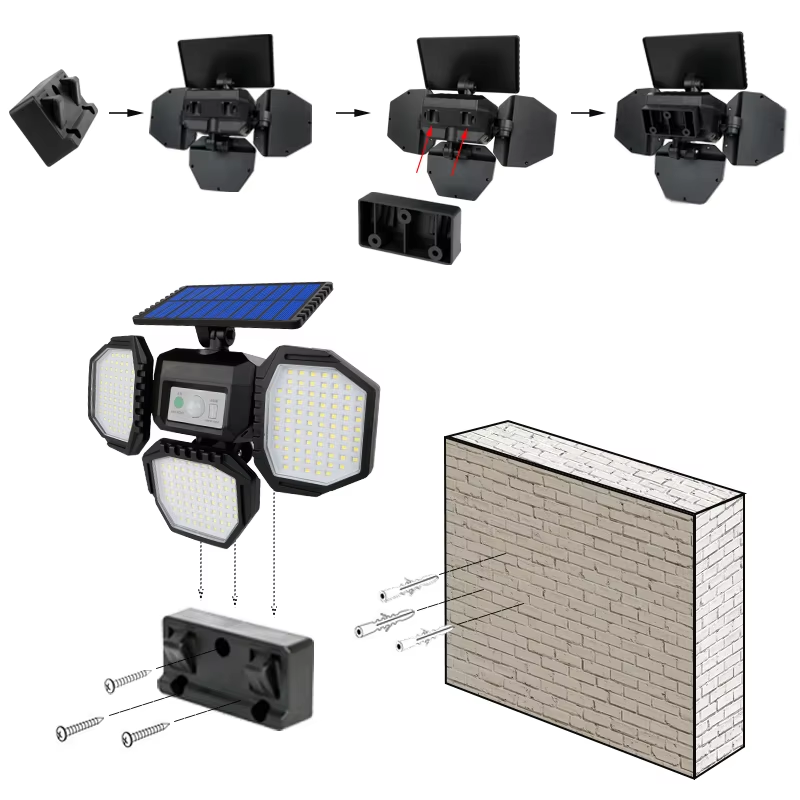
In most cases, no. Because the motion solar sensor light is a self-contained, off-grid system, installation typically involves mounting the unit at the desired location and positioning the solar panel toward the sun — tasks achievable with standard hand tools and without electrical expertise. This makes it an accessible safety upgrade for both homeowners and commercial facility teams.
Table of Contents
- Understanding How a Motion Solar Sensor Light Works
- Safety Benefits in Residential Areas
- Safety Benefits in Commercial and Industrial Settings
- Operational Efficiency and Long-Term Value
- Installation Considerations for Maximum Safety Impact
-
FAQ
- How long does a motion solar sensor light stay on after activation?
- Can a motion solar sensor light function during cloudy or rainy weather?
- Is a motion solar sensor light suitable for large commercial parking lots?
- Does the motion solar sensor light require a professional electrician for installation?
