 EN
EN

When professionals work in demanding conditions — whether in construction, emergency response, law enforcement, or outdoor fieldwork — their equipment must withstand the same pressures they face. tactical flashlights have become a cornerstone tool in these environments precisely because they are engineered not just to produce light, but to endure. Understanding how tactical flashlights achieve superior durability helps professionals, procurement teams, and field managers make more informed equipment decisions.
Durability in harsh working environments is not a single property — it is a combination of material strength, engineering design, component quality, and performance consistency under stress. Tactical flashlights are purpose-built to address each of these factors simultaneously. Unlike standard consumer-grade lighting tools, tactical flashlights go through rigorous design processes to ensure they perform reliably when conditions are at their worst, making them a fundamentally different category of portable illumination equipment.
The Engineering Behind Tactical Flashlight Durability
Material Selection and Construction Standards
One of the primary reasons tactical flashlights maintain their durability under harsh conditions is the materials used in their construction. Most professional-grade tactical flashlights are built from aerospace-grade aluminum alloy or reinforced polymer composites. These materials offer an exceptional strength-to-weight ratio, meaning the flashlight body can absorb impacts and resist deformation without becoming cumbersome for the user to carry or operate.
Aluminum alloy, in particular, has become the dominant material choice for tactical flashlights in professional settings. It resists corrosion from moisture and chemical exposure, handles thermal fluctuations without structural compromise, and maintains its integrity after repeated drops or impacts. The outer body of many tactical flashlights features a hard-anodized coating, which adds a secondary layer of scratch and wear resistance on top of the already robust base material.
Beyond the body, the lens material plays a critical role in durability. Tactical flashlights typically use tempered glass or polycarbonate lenses that resist shattering under impact. These lens materials are selected to maintain optical clarity even after exposure to grit, chemical splatter, and extreme temperature changes — conditions that would crack or cloud a standard flashlight lens within a short period.
Waterproofing and Weather Resistance
Harsh working environments rarely offer dry, controlled conditions. From coastal infrastructure projects and underground mining to firefighting and heavy rainfall operations, tactical flashlights must function reliably when exposed to water. Most professional tactical flashlights are rated according to international IP (Ingress Protection) standards, with many achieving IPX7 or IPX8 ratings, meaning they can withstand full submersion in water for extended periods without damage.
This waterproofing is achieved through precision-machined seals, O-ring gaskets placed at every junction point, and pressure-tested body construction. The result is a sealed unit that prevents moisture from reaching the battery compartment, LED module, or internal circuitry. In environments where rain, flooding, or wet surfaces are routine, this level of weather resistance directly translates into extended service life and reduced equipment failure rates.
Additionally, quality tactical flashlights are designed to resist humidity and condensation — a factor often overlooked in standard lighting products. Humid environments can cause internal corrosion, battery leakage, and circuit degradation over time. The sealed construction of tactical flashlights directly counters this degradation pathway, keeping operational reliability intact across months and years of field use.
Impact Resistance and Mechanical Robustness
Drop Testing and Shock Absorption
Professional working environments expose equipment to frequent drops, collisions, and vibration. Tactical flashlights are typically tested against standardized drop-resistance protocols, with many models rated to withstand falls from 1 to 2 meters onto hard surfaces without functional impairment. This is not achieved through a single design element but through a combination of factors: the thickness and alloy grade of the body, the recessed positioning of the lens to protect it from direct impact, and the internal mounting of the LED module to cushion it from shock transmission.
The tail cap and battery compartment of tactical flashlights are reinforced junction points that often receive disproportionate impact in real-world use. High-quality tactical flashlights feature machined threading at these connection points rather than molded or press-fit connections. Machined threading allows for tighter tolerances, more secure assembly, and far greater resistance to jarring or twisting forces that would otherwise separate components.
Vibration resistance is equally important in environments such as vehicle operations, industrial machinery settings, or heavy equipment use. Tactical flashlights designed for these contexts use internally isolated LED mounts and shock-absorbing component housings that prevent vibration from degrading solder joints, loosening internal connections, or causing operational failures during extended use cycles.
Structural Integrity Under Thermal Stress
Temperature extremes are among the most punishing forces on portable electronic equipment. Tactical flashlights used in cold-weather field operations, foundry environments, or vehicle engine bays face temperature swings that would cause standard flashlights to fail through lens cracking, battery underperformance, or circuit board warping. Thermal durability in tactical flashlights is addressed at multiple design levels.
Aluminum alloy bodies are inherently good thermal conductors, which means they help dissipate heat generated by high-output LED modules rather than allowing it to concentrate and damage internal components. This heat dissipation function extends both the component lifespan and the consistent brightness output of tactical flashlights across long operating periods. For users who rely on sustained, high-intensity illumination, this thermal management is a direct performance advantage.
In cold environments, the sealed battery compartments of tactical flashlights protect battery chemistry from rapid temperature drops that reduce charge capacity or cause leakage. Some tactical flashlights also incorporate driver circuit designs that regulate power output across wide temperature ranges, ensuring stable light output whether the flashlight is used in sub-zero fieldwork or in hot industrial settings.
LED Technology and Long-Term Reliability
LED Module Lifespan and Performance Consistency
The light source itself is central to the long-term durability of tactical flashlights. LED technology has transformed portable lighting by offering lifespans of 50,000 hours or more, compared to the few hundred hours typical of incandescent bulbs. For professionals using tactical flashlights in daily operations, this lifespan advantage means dramatically reduced replacement costs and fewer operational interruptions due to burned-out bulbs.
High-quality tactical flashlights use premium LED chips that maintain lumen output consistency over their rated lifespan. Standard LEDs experience significant lumen depreciation — a gradual dimming — as they age, especially under frequent high-output use. Professional-grade tactical flashlights use LEDs and driver circuits specifically selected and paired to minimize this depreciation, keeping light output predictable and reliable over time.
The positioning and protection of the LED module also contribute to durability. In tactical flashlights, the LED is typically recessed behind the lens and mounted with thermal interface materials that both protect it from shock and efficiently transfer heat away from the emitter. This design philosophy treats the LED as a critical long-life component rather than a consumable part, which fundamentally changes the durability profile of the entire product.
USB Rechargeable Systems and Power Reliability
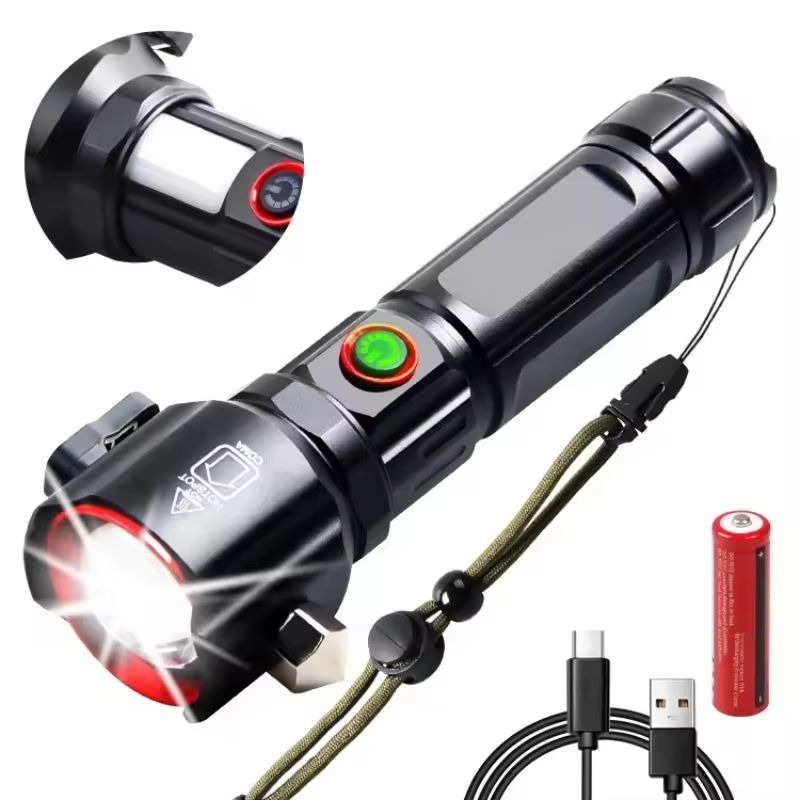
Modern tactical flashlights increasingly incorporate USB rechargeable battery systems, which improve durability from a practical operational standpoint. Built-in lithium-ion battery packs with integrated USB charging eliminate the degradation risk associated with battery compartments that are frequently opened and closed for battery swaps. Fewer mechanical cycles on seals and threading means longer-lasting waterproofing and structural integrity over the product's service life.
USB rechargeable tactical flashlights also incorporate battery management circuits that protect against overcharging, deep discharge, and short circuits — all of which are common causes of premature battery failure or, in severe cases, safety incidents. These protection circuits extend battery cycle life significantly, meaning the power system inside the tactical flashlight lasts as long as the physical body rather than becoming the first component to fail.
For fieldwork in remote or mobile environments, the ability to recharge tactical flashlights via standard USB connections — from vehicles, portable power banks, or solar chargers — removes dependence on specific battery formats. This operational flexibility is itself a form of durability: equipment that can be powered and maintained under diverse field conditions is inherently more resilient as a professional tool.
Functional Features That Enhance Durability in Practice
Zoom and Beam Control Under Variable Conditions
Durability is not solely about surviving abuse — it also means remaining functionally effective across varied working conditions. Tactical flashlights with adjustable zoom mechanisms allow professionals to switch between focused, long-range beams and wide-angle flood illumination without changing tools. This versatility reduces the need to carry multiple lighting instruments, which in turn reduces the total wear placed on individual units.
The zoom mechanism in high-quality tactical flashlights uses precision-machined sliding lens tubes rather than loose or friction-fit components. Machined zoom assemblies maintain their calibration and smooth operation even after extended use, exposure to grit, and temperature cycling. Poorly constructed zoom mechanisms are among the first features to degrade in field use, making the quality of this component a meaningful durability indicator for tactical flashlights.
Beam quality also affects safety in harsh environments. Professionals using tactical flashlights in low-visibility conditions — smoke, fog, heavy rain, or dust-laden air — rely on consistent, high-contrast beams to identify hazards and navigate safely. A durable tactical flashlight that maintains its optical performance even in these conditions is a direct safety asset, not merely a convenience feature.
Multi-Function Integration and Tool Consolidation
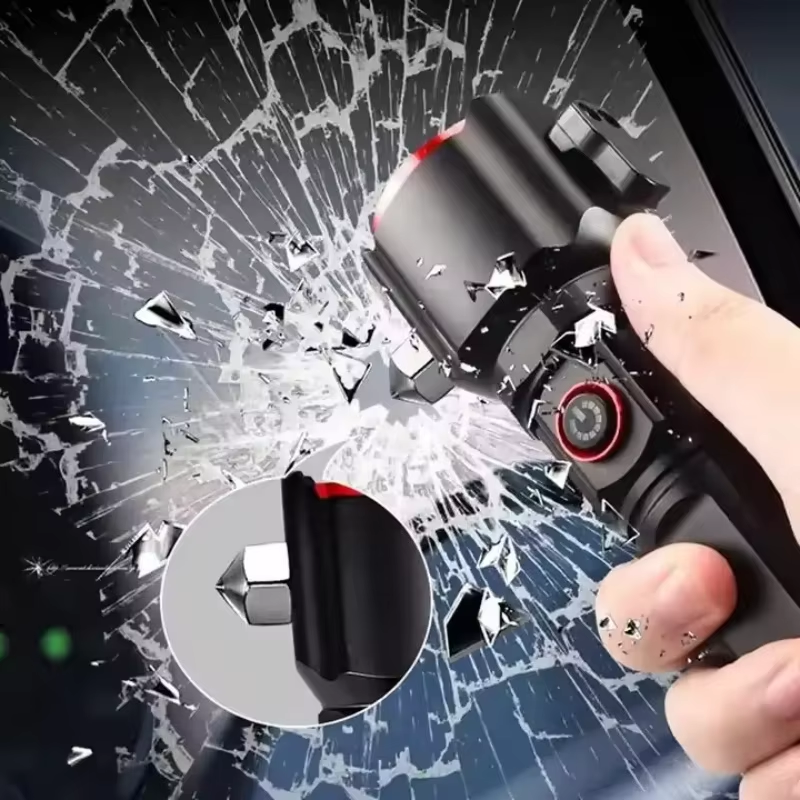
Some advanced tactical flashlights incorporate additional tools such as a safety hammer or a cutting edge, combining emergency functionality with primary illumination in a single durable unit. For professionals in transport, security, or emergency services, this integration reduces the number of individual tools they must maintain and increases the likelihood that critical equipment is always immediately available.
The inclusion of these features in tactical flashlights is engineered with durability in mind. Safety hammer tips are typically made from hardened steel or reinforced carbide inserts, designed to withstand the force required to break tempered glass in emergency vehicle escape situations. The integration of these components does not compromise the structural integrity of the flashlight body; rather, it is incorporated into the tail cap or grip section of the unit in a way that reinforces rather than weakens the overall design.
From a procurement standpoint, multi-function tactical flashlights represent an efficiency advantage. A single durable unit that performs reliably across multiple emergency scenarios reduces procurement complexity, simplifies training, and lowers the total cost of equipping field personnel. The durability requirements for such integrated tools are inherently higher, which is why the construction standards for professional tactical flashlights in this category are among the most demanding in the portable tool segment.
FAQ
What IP rating should tactical flashlights have for outdoor professional use?
For professional outdoor use, tactical flashlights should ideally have a minimum IP65 rating, which protects against water jets from any direction. For operations near water, submersion risks, or heavy rain environments, IPX7 or IPX8 ratings are preferred. These ratings ensure that tactical flashlights remain fully operational even when exposed to significant moisture, making them suitable for construction, emergency response, and fieldwork in wet climates.
How does the zoom feature in tactical flashlights hold up over extended use?
The longevity of the zoom feature in tactical flashlights depends largely on the manufacturing precision of the lens tube and the materials used. High-quality tactical flashlights use machined aluminum zoom assemblies with tight tolerances that maintain smooth, consistent operation even after thousands of adjustment cycles. Cheaper units with molded plastic zoom mechanisms typically show wear, play, or jamming much earlier. Investing in machined-construction tactical flashlights ensures the zoom function remains reliable over the product's full service life.
Are USB rechargeable tactical flashlights as reliable as those using replaceable batteries?
USB rechargeable tactical flashlights with integrated lithium-ion batteries are highly reliable for professional use when they incorporate quality battery management circuits. These circuits prevent the overcharging and deep discharge cycles that degrade battery performance over time. For environments where battery replacement is inconvenient or where maintaining consistent power is critical, rechargeable tactical flashlights with USB compatibility offer a practical and durable power solution. The reduced mechanical wear from fewer battery compartment openings also benefits long-term waterproofing integrity.
What makes tactical flashlights more durable than standard industrial flashlights?
Tactical flashlights are distinguished from standard industrial flashlights primarily by the combination of aerospace-grade materials, precision engineering, and multi-standard testing protocols applied during their development. While some industrial flashlights meet basic durability benchmarks, tactical flashlights are designed to exceed those benchmarks across multiple simultaneous stress factors — impact, water, temperature, and vibration. The result is a category of portable lighting that maintains performance consistency in the most demanding real-world conditions that professionals encounter.
Table of Contents
- The Engineering Behind Tactical Flashlight Durability
- Impact Resistance and Mechanical Robustness
- LED Technology and Long-Term Reliability
- Functional Features That Enhance Durability in Practice
-
FAQ
- What IP rating should tactical flashlights have for outdoor professional use?
- How does the zoom feature in tactical flashlights hold up over extended use?
- Are USB rechargeable tactical flashlights as reliable as those using replaceable batteries?
- What makes tactical flashlights more durable than standard industrial flashlights?
