 EN
EN

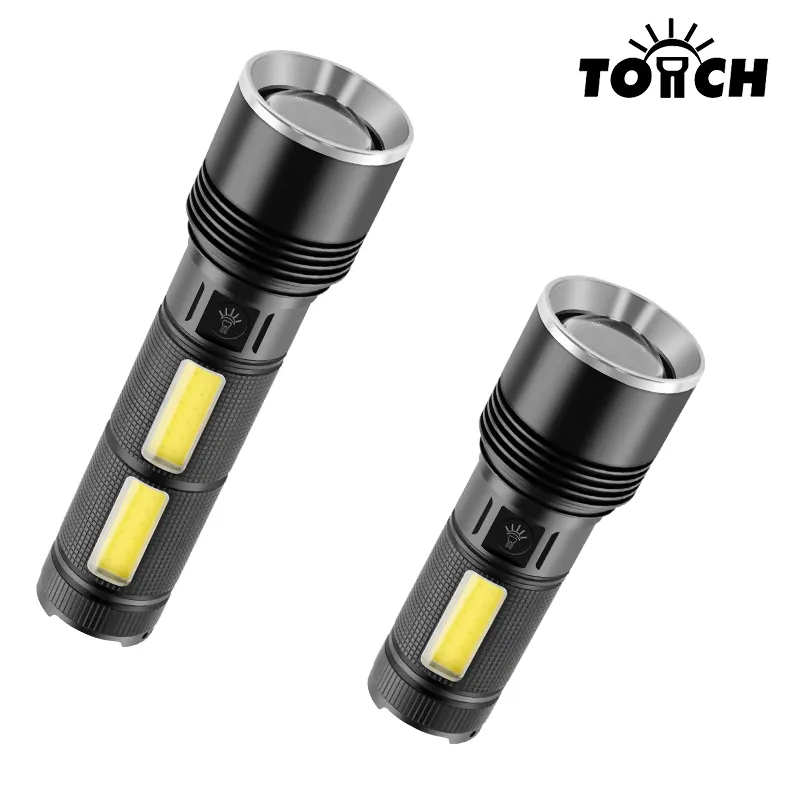
When lives are on the line during outdoor search and rescue missions, every piece of equipment must perform without compromise. A high power flashlight is not simply a convenience tool — it is a critical instrument that directly affects how quickly and effectively a team can locate a missing person, navigate treacherous terrain, or signal for help across vast distances. Professionals who operate in these high-stakes environments understand that standard illumination tools simply cannot meet the demands of the field, and this is precisely why a high power flashlight has become a non-negotiable part of every serious search operation kit.
The choice professionals make when selecting a high power flashlight is driven by a combination of performance specifications, reliability under extreme conditions, and practical usability during long hours of operation. This article examines the core reasons why experienced search-and-rescue operatives, law enforcement officers, and outdoor expedition leaders consistently reach for a high power flashlight over any other lighting solution available on the market. Understanding these reasons also helps organizations and procurement teams make smarter, better-informed decisions when equipping their teams.
The Critical Role of Lumens and Beam Range in Search Operations
Why Raw Light Output Changes Search Outcomes
At the heart of any high power flashlight selection decision is its lumen output. Lumens measure the total quantity of visible light emitted, and in search operations, higher lumen counts translate directly into a wider illuminated area and greater visibility at distance. A high power flashlight capable of outputting 10,000 lumens or more can effectively light up areas that would otherwise remain in complete darkness, including dense forest canopies, steep ravines, and open bodies of water at night.
Professional search teams frequently operate in conditions where ambient lighting is zero or near-zero. In these scenarios, a high power flashlight with exceptional lumen output becomes the primary sensory tool the team relies on. The difference between a 1,000-lumen and a 10,000-lumen device is not merely a factor of ten in brightness — it is the difference between seeing a reflective surface from 50 meters versus identifying a motionless body from over 300 meters away.
This raw capability is why agencies and teams that routinely conduct nighttime or low-visibility searches treat their high power flashlight as mission-critical gear. The ability to project light across long ranges reduces search time, decreases physical exertion during coverage sweeps, and increases the probability of detection during the initial passes over a search zone.
Beam Reach and the Long-Range Advantage
Beyond lumens, the beam range of a high power flashlight determines how far its projected light can travel in a focused, usable form. A high-quality high power flashlight with adjustable zoom functionality allows operatives to switch between flood mode — which illuminates a wide area close to the user — and spot mode, which focuses the beam into a narrow, intense column of light that can penetrate hundreds of meters of darkness.
This tactical flexibility is invaluable during search operations that span multiple terrain types. When scanning a hillside from a base camp, professionals need maximum throw distance to cover elevated ground without moving into potentially dangerous positions. A high power flashlight with long-range beam capability allows teams to pre-screen areas visually before committing resources to a physical sweep, saving both time and energy.
In maritime and waterway search operations, beam range becomes even more critical. The flat surface of a lake or river offers few natural reflective obstacles, meaning only a high power flashlight with superior throw distance can effectively scan open water at night. Professionals in these scenarios consistently report that beam reach is one of the top factors they evaluate when selecting their primary illumination tool.
Durability and Environmental Resistance During Field Deployment
Waterproof Construction as a Professional Requirement
Outdoor search operations do not pause for weather. Rain, flooding, river crossings, and coastal environments are all common scenarios where a high power flashlight must continue functioning without interruption. This is why professionals prioritize waterproof-rated devices with recognized ingress protection certifications. A high power flashlight built to withstand submersion or sustained rain exposure ensures that a critical tool does not fail at the worst possible moment.
Metal-bodied construction further adds to the environmental resilience of a professional-grade high power flashlight. Aluminum alloy housings dissipate heat efficiently, resist corrosion, and withstand the kind of impact and abrasion that occurs naturally during field operations. Unlike plastic-bodied alternatives, a metal high power flashlight maintains its structural integrity when dropped onto rocky terrain or subjected to rough handling during vehicle transport.
The combination of waterproofing and robust metal construction is why procurement teams responsible for outfitting search-and-rescue divisions overwhelmingly select metal-bodied, water-resistant models. These two features alone significantly reduce equipment failure rates in the field, which in turn reduces operational disruptions during time-sensitive missions.
Thermal Management and Extended Operation
A high power flashlight running at maximum output generates substantial heat within its LED module and battery compartment. Poorly designed devices overheat within minutes, triggering automatic step-down modes that reduce brightness precisely when maximum performance is needed. Professionals understand this limitation and select a high power flashlight that incorporates engineered thermal management systems capable of sustaining high output for extended periods.
Quality thermal management typically involves heat-dissipating fins built into the body, copper substrates beneath the LED, and controlled firmware that balances brightness output against temperature thresholds. For a search team covering ground for four to eight hours continuously, a high power flashlight that maintains consistent performance without uncontrolled thermal throttling is a requirement, not a luxury.
This consideration is especially important in mountainous or high-altitude environments where ambient temperature extremes — both extreme cold and unexpected warmth during exertion-heavy operations — affect battery performance and LED efficiency. A well-engineered high power flashlight accounts for these variables through design, giving professional users confidence that their equipment will perform consistently regardless of the environmental conditions they encounter.
Rechargeability and Power Reliability for Long Missions
Rechargeable Technology Reduces Operational Friction
One of the most practical reasons professionals consistently choose a rechargeable high power flashlight over disposable-battery models is the elimination of logistical dependency. Search operations in remote areas cannot rely on a steady supply of replacement batteries, and carrying large quantities of single-use power cells adds weight and bulk to already heavy load-outs. A rechargeable high power flashlight solves this problem by allowing teams to recharge from vehicle power systems, portable power banks, or solar charging setups carried into the field.
Rechargeable lithium-ion battery technology also delivers more consistent voltage output across the discharge cycle compared to conventional alkaline batteries, which means the high power flashlight maintains a more stable brightness level throughout the mission rather than gradually dimming as power depletes. This performance consistency is important in search scenarios where precise visual identification requires steady, reliable illumination rather than a fading beam.
Modern rechargeable high power flashlight models also feature intelligent charging circuits that protect against overcharge, over-discharge, and short circuit conditions, extending the operational lifespan of both the battery and the device itself. For organizations managing fleet-level equipment, this durability directly reduces total cost of ownership over multiple seasons of deployment.
Multiple Output Modes and Runtime Management
Professional users of a high power flashlight rarely operate at full output throughout an entire mission. Experienced searchers understand that strategic output management extends runtime and conserves battery capacity for moments when maximum brightness is genuinely necessary. This is why multiple output modes — typically ranging from low through medium to high and strobe — are valued features in any high power flashlight used in the field.
Low and medium modes are useful during navigation phases of a search, when the team is moving through familiar terrain or following a marked path. Reserving the high power flashlight's maximum output for active scanning zones, victim identification moments, and emergency signaling ensures the battery can sustain operations across the full duration of the mission without requiring an unplanned recharge or replacement mid-operation.
The strobe function on many high power flashlight models also serves a dual purpose in search scenarios: it can be used to disorient or warn away wildlife in areas where animal encounters are a risk, and it functions as a distress beacon visible across large distances if a team member becomes separated. This multipurpose utility reinforces why the high power flashlight is designed as a comprehensive operational tool rather than a simple illumination device.
Tactical Design Features That Support Professional Use
Ergonomics and Grip for Active Field Use
A high power flashlight used in outdoor search operations must fit naturally in the hand even during extended use, and its controls must remain accessible when the operator is wearing gloves, handling ropes, or climbing. Professional-grade designs incorporate knurled grip patterns on the body, anti-roll profiles, and logically positioned switches that can be activated with minimal visual attention.
The weight distribution of a high power flashlight also matters more than many users initially appreciate. A device that is too front-heavy causes fatigue during prolonged handheld use, while an evenly balanced design allows the operator to hold the light comfortably for hours without affecting grip stability. Organizations that conduct multi-hour search operations in demanding physical terrain specifically evaluate ergonomic balance when selecting their standard-issue high power flashlight.
Some professional configurations also include helmet or headband mounting accessories that allow the high power flashlight to be worn hands-free during climbing or rope work portions of a search. The availability of mounting solutions without requiring specialized proprietary adapters is another practical consideration that drives experienced teams toward specific high power flashlight models with standardized form factors.
Zoom Functionality for Tactical Versatility
The ability to rapidly adjust between flood and spot beam patterns gives the professional user of a high power flashlight a critical tactical advantage. During a ground sweep, a wide flood beam illuminates the immediate surroundings comprehensively, reducing the chance of overlooking a subject in dense vegetation. When a potential sighting requires confirmation, zooming to a focused spot beam allows the operator to verify at distance without moving closer, preserving the safety of the team and the integrity of the search area.
Zoom mechanisms on a professional high power flashlight must be smooth, reliable, and operable with one hand. Stiff or fragile zoom assemblies create operational friction at critical moments and represent a point of mechanical failure under rough field conditions. This is why professionals specifically evaluate the quality and durability of the zoom mechanism when assessing a high power flashlight before fielding it for operational use.
The combination of adjustable zoom with high lumen output creates a versatile tool that adapts to nearly every illumination scenario encountered during outdoor search work. From narrow canyon passages to open hillside sweeps, the ability to shape the beam to match the environment is a defining reason why a zoomable high power flashlight earns the trust of experienced professionals over fixed-beam alternatives.
FAQ
What lumen output is considered appropriate for a high power flashlight used in outdoor search operations?
For professional outdoor search operations, a high power flashlight with at least 5,000 lumens is generally considered the entry point for effective long-range visibility. Devices offering 10,000 lumens or more provide significantly greater detection range and area coverage, which is why they are preferred for wilderness and nighttime search missions where maximizing detection probability is the primary objective.
Is waterproofing an essential specification for a high power flashlight in field use?
Yes, waterproofing is a non-negotiable specification for any high power flashlight intended for outdoor operational use. Search operations frequently occur during adverse weather conditions, near water bodies, or in environments where equipment may be submerged briefly during stream crossings. A device with verified ingress protection rating ensures continuous functionality regardless of moisture exposure encountered during the mission.
How does zoom functionality benefit professionals using a high power flashlight during search operations?
Zoom functionality allows the operator to adjust the high power flashlight between a wide flood beam for close-range area illumination and a narrow spot beam for long-distance target identification. This flexibility eliminates the need to carry multiple lights with different beam profiles, simplifying the equipment load while delivering greater operational versatility across the varied terrain and distance requirements encountered during any given search mission.
Why do professionals prefer rechargeable models when selecting a high power flashlight for extended operations?
Rechargeable models reduce dependency on disposable battery supplies, which is impractical in remote field environments. A rechargeable high power flashlight can be repowered from vehicle chargers, portable power banks, or solar sources, allowing teams to sustain operations across multiple consecutive shifts without interruption. The consistent voltage output of lithium-ion technology also maintains more stable brightness throughout the discharge cycle compared to conventional batteries.
Table of Contents
- The Critical Role of Lumens and Beam Range in Search Operations
- Durability and Environmental Resistance During Field Deployment
- Rechargeability and Power Reliability for Long Missions
- Tactical Design Features That Support Professional Use
-
FAQ
- What lumen output is considered appropriate for a high power flashlight used in outdoor search operations?
- Is waterproofing an essential specification for a high power flashlight in field use?
- How does zoom functionality benefit professionals using a high power flashlight during search operations?
- Why do professionals prefer rechargeable models when selecting a high power flashlight for extended operations?
